 WomenBet
Sports Betting Terminology
 Available in US

Walking into a sportsbook—whether physical or digital—without understanding the language is like showing up to a French restaurant and trying to order by pointing at random items on the menu. You might get food, but it probably won't be what you wanted, and the staff will definitely judge you. Sports betting has developed its own vocabulary over decades, a mix of mathematical terms, gambling slang, and insider jargon that can make newcomers feel like outsiders looking through a window at a party they weren't invited to.
The good news is that this language isn't actually complicated. It's just unfamiliar. Once you learn what "juice" means (spoiler: it's not a drink) and why people keep talking about "hooks" (not fishing equipment), the entire betting world opens up. This glossary covers the terms you'll encounter most frequently, organized not alphabetically but by how you'll actually use them—starting with the basics and building toward more advanced concepts. Treat this as your translation guide from betting-speak to plain English.
The Foundation: Core Betting Concepts
Action is the most fundamental term in betting, and it simply means having money on a game. If someone asks "Do you have action on the Fever game tonight?" they're asking if you've placed a bet. The term extends beyond individual wagers too—sportsbooks will talk about "heavy action" on one side of a bet, meaning lots of money has come in favoring that outcome. Understanding where the action is flowing can provide insight into how lines might move.
Stake refers to the amount of money you're risking on a bet. Your stake is what you're putting on the line, not what you stand to win. If you place a $50 bet, your stake is $50 regardless of the potential payout. Professional bettors often discuss stakes in terms of "units" rather than dollar amounts, which we'll cover shortly. The distinction matters because your stake is the money you could lose, while your potential return includes both the stake and the profit.
Bankroll is the total amount of money you've set aside specifically for betting. This isn't your rent money or your grocery budget—it's funds you can afford to lose entirely without affecting your life. Serious bettors treat their bankroll as a dedicated investment pool, separate from other finances. The size of your bankroll determines how much you should stake on individual bets, typically between 1% and 5% of your total.
Unit is a standardized betting amount that represents a percentage of your bankroll. If your bankroll is $1,000 and you define one unit as 2%, each unit equals $20. When a handicapper says they're "three units on the Liberty tonight," they're betting three times their standard amount, signaling high confidence. Using units instead of dollar amounts allows bettors with different bankroll sizes to compare strategies meaningfully.
The House Edge: Understanding Sportsbook Economics

Juice (also called vig or vigorish) is the commission sportsbooks charge for taking your bet. It's built into the odds themselves, which is why you typically see -110 on both sides of a spread bet rather than +100. That extra $10 you risk to win $100 is the juice. Different books have different juice levels, and finding lower juice can significantly improve your long-term returns. Some sportsbooks advertise "reduced juice" promotions where they might offer -105 instead of -110.
Hold is related to juice but represents the sportsbook's overall margin on a market. If one side of a bet is -110 and the other is also -110, the hold is approximately 4.5%. This is the percentage the book expects to keep over time regardless of outcomes. Lower holds mean better value for bettors. Some markets, particularly props and futures, can have holds exceeding 10%, making them significantly worse value than standard sides.
Handle refers to the total amount of money wagered on an event across all bettors. When you read that "$20 million was bet on the Super Bowl in Nevada," that's the handle. Sportsbooks track handles carefully because they need balanced action on both sides to guarantee profit. Lopsided handles—too much money on one side—create risk for the book, which might then adjust the line to encourage bets on the other side.
Sharp describes a professional or highly skilled bettor whose opinions move lines. When sharps bet heavily on one side, sportsbooks take notice and often adjust their numbers accordingly. Being called "sharp" in betting is a compliment—it means your action is respected. The opposite is a "square," an unsophisticated recreational bettor whose action books are happy to take because squares tend to lose over time.
Line Movement: Why Numbers Change
Opening line is the first set of odds a sportsbook posts for an event. These might come out days or even weeks before the event, and they're based on the oddsmaker's initial assessment of the matchup. Opening lines are particularly important because they represent the most "pure" odds before public betting action influences the numbers.
Closing line is the final odds available before an event begins. Professional bettors obsess over closing line value (CLV), which measures whether you got better odds than the closing number. Consistently beating the closing line suggests you're making smart bets, even if some of those bets lose. The market tends to be most efficient at closing time, so the closing line is often considered the most accurate prediction.
Steam describes rapid line movement caused by significant betting action, typically from sharp bettors or betting syndicates. When a line "steams" from -3 to -5 in minutes, smart money is pouring in on the favorite. Some bettors try to "chase steam" by betting the same side quickly, hoping to catch favorable odds before books fully adjust. This requires fast action and multiple sportsbook accounts.
Reverse line movement (RLM) occurs when a line moves in the opposite direction from where the majority of bets are landing. If 70% of bets are on Team A but the line moves in favor of Team B, sharp money is likely on Team B despite fewer overall tickets. RLM can be a useful indicator, though it's not foolproof and requires context to interpret correctly.
Types of Bets: What You're Actually Wagering On
Moneyline bets are the simplest form—you're just picking who wins the game outright. No point spreads, no complications. If the team you bet on wins, you win. The catch is that favorites pay less than even money (you risk more than you can win) while underdogs pay more than even money. Moneylines are expressed as three-digit numbers with plus or minus signs.
Spread (point spread) bets involve a handicap applied to level the playing field between teams. A -6.5 spread means the favorite must win by 7 or more points for spread bettors to cash. The underdog at +6.5 can lose by up to 6 points and still "cover." Spreads make betting more interesting when one team is heavily favored, since you're not just picking winners but predicting margins.
Total (over/under) bets focus on the combined score of both teams rather than who wins. If the total is set at 210.5 for a basketball game and you bet the over, you need the combined final score to reach 211 or higher. Totals are popular because they allow you to have action on a game without picking a side—you're betting on the pace and style of play rather than the outcome.
Parlay bets combine multiple selections into a single wager where all picks must win for you to cash. The appeal is massive potential payouts—a four-team parlay at standard odds pays roughly 10-to-1. The problem is that parlays are extremely difficult to hit and carry significantly worse expected value than straight bets. Sportsbooks love when people bet parlays, which should tell you something.
Prop (proposition) bets focus on specific occurrences within a game rather than the final outcome. Player props might be "Caitlin Clark over/under 22.5 points." Game props could be "First team to score" or "Will there be overtime?" Props have proliferated massively in recent years, offering hundreds of betting options on major events. They're fun but often carry higher juice than standard markets.
Futures are long-term bets on outcomes that won't be decided for weeks or months—like betting on a team to win the championship before the season starts, or picking the MVP in October. Futures can offer excellent value if you identify winners early, but your money is tied up for a long time and the juice on futures markets tends to be substantial.
Game Situations: The In-Play Vocabulary
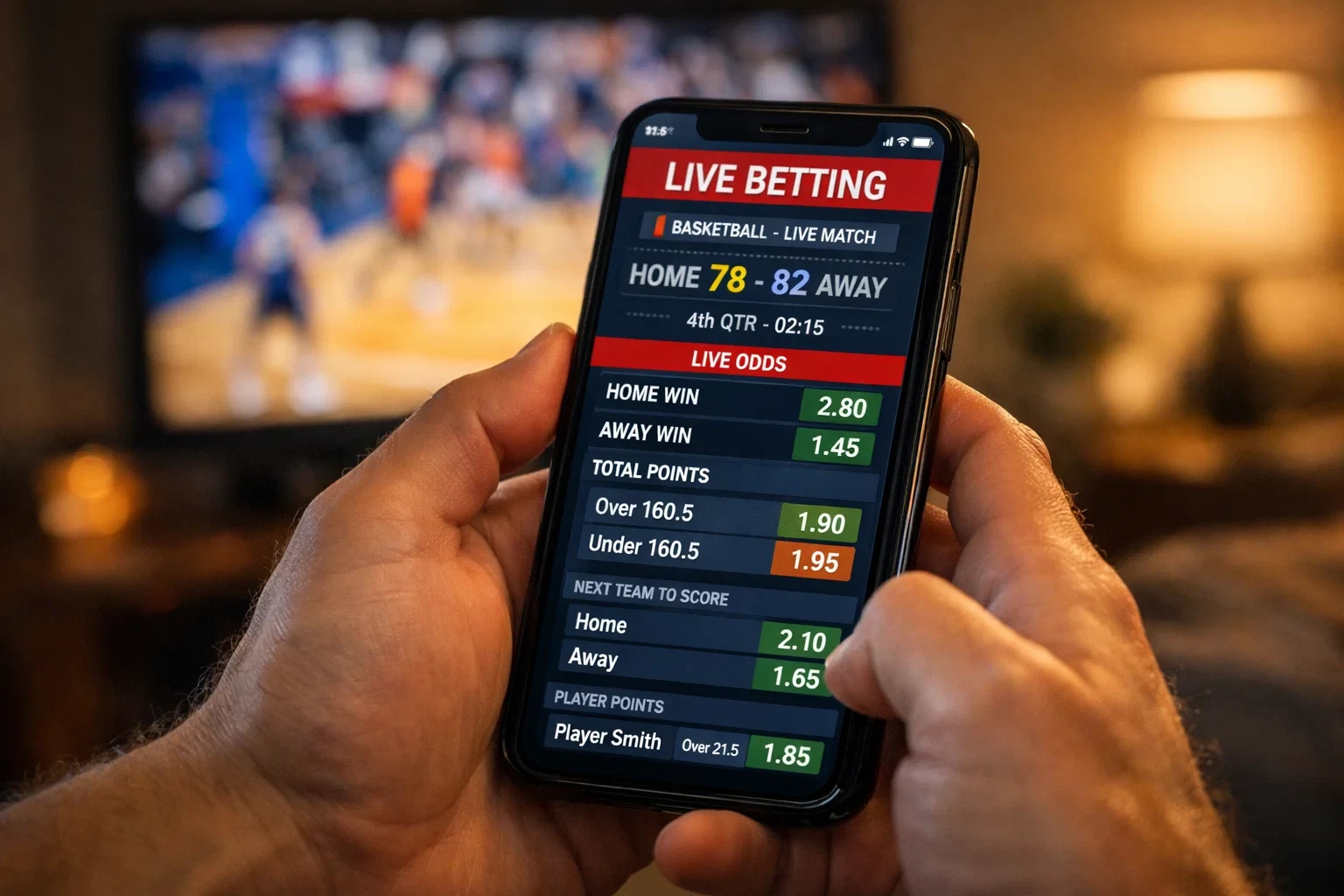
Live betting (in-game or in-play betting) allows you to place wagers while an event is in progress. Odds update continuously based on what's happening, creating opportunities for bettors who read the action well. Live betting has exploded in popularity because it keeps bettors engaged throughout events rather than just at tipoff.
Cash out is a feature letting you settle a bet before the event concludes, either locking in profit or cutting losses. If you bet an underdog and they're leading late, the sportsbook might offer to buy back your bet at a premium. Cash out values are calculated by the book and typically favor the house, so use this feature strategically rather than emotionally.
Push occurs when the result lands exactly on the number, and all bets are refunded. If the spread is -7 and the favorite wins by exactly 7, that's a push. Bettors get their stake back but no profit. This is why you often see half-point spreads (like -7.5)—they eliminate the possibility of a push.
Bad beat is the painful experience of losing a bet you should have won due to a late, unexpected development. Your team is covering comfortably, and then they give up a meaningless touchdown in garbage time that ruins your spread bet. Bad beats are inevitable, and how you handle them emotionally is a major factor in long-term betting success.
Start instantly cleanly tracking your bets.
Advanced Terms: Leveling Up Your Vocabulary
ATS (against the spread) refers to a team's record when betting the spread rather than their straight-up win-loss record. A team might be 10-2 straight up but only 5-7 ATS because they keep winning by less than the spread predicts. ATS records are crucial for spread bettors and often tell a different story than regular standings.
Hook is a half-point on a spread or total. If the line is -7.5, the half-point is called the hook. "Getting the hook" means your team covers by that half-point—winning by 8 when you had -7.5. The hook can be incredibly valuable, turning losses into wins on close games.
Key numbers are common final margins in a sport that influence how lines are set and bet. In NFL football, 3 and 7 are key numbers because games often end with one team winning by a field goal or touchdown. Lines around these numbers carry extra significance, and sportsbooks are reluctant to move through them even with heavy action.
Hedging is betting the opposite side of a previous wager to guarantee profit or minimize loss. If you have a futures bet to win the championship and your team makes the finals, you might hedge by betting their opponent, ensuring you win something regardless of the outcome. Hedging sacrifices maximum upside for security.
Middle is the holy grail of betting—winning both sides of a bet by catching favorable line movement. If you bet Team A -3 on Monday and the line moves to -6 by game time, betting Team B +6 creates a middle where you win both bets if Team A wins by 4 or 5. Middles are rare but beautiful when they hit.
Putting It Together
Learning betting terminology isn't about sounding smart at the sportsbook—though that's a nice bonus. It's about understanding what you're actually doing with your money. When you know that -110 juice means you need to win about 52.4% of your bets to break even, you approach wagering differently. When you understand that steam on one side might create value on the other, you're thinking like a sharp rather than betting like a square.
The vocabulary also helps you consume betting content more effectively. Podcasts, articles, and Twitter accounts covering sports betting assume familiarity with these terms. Without that foundation, you're missing context that could inform better decisions. With it, you can evaluate expert opinions, understand line movements, and participate in betting communities without feeling lost.
Start by mastering the core concepts—action, stake, juice, spread, total. From there, pick up additional terms as you encounter them in your betting life. Within a few weeks of active participation, most of this vocabulary will feel natural, and you'll wonder how it ever seemed confusing. That's when the real learning begins: not the words themselves, but the wisdom to use them profitably.
Get high value rewards via women bet.
