 WomenBet
 Women Bet: The Complete Guide to Sports Betting for Women
 Available in US
How Women Are Reshaping Sports Betting with Smarter Strategies and Better Returns

Women’s Sports Betting Guide: Key Concepts and Practical Starting Points
Sports betting is experiencing a seismic shift. Women now represent 32% of sports bettors in the United States, up from just 21% in 2020. This isn't simply demographic change—it's fundamental transformation of how betting works, who participates, and what success looks like. The evidence is stark: women achieve average returns of 19.4% while men lose an average of 4%. This performance gap isn't noise. It's signal.
This guide exists because most sports betting advice was written by men for men, assuming approaches that don't align with how many women actually bet. The research from University of New Haven and BettingLadies reveals that women bet larger amounts on average—$51.10 per wager compared to men's $48.60—but bet far less frequently. About 62.5% of female bettors wager less than $100 monthly, while only 30% of male bettors stay in that range. Most men exceed $500 monthly. These aren't just different numbers. They're different philosophies.
Women prioritize entertainment and social engagement over competition and financial gain. This seemingly simple preference cascades into decisions about research depth, bet sizing, platform choice, and risk management. The result? Women develop problem gambling at roughly half the rate men do, even as their betting volume grows. Understanding these differences matters not just for individual success but for reshaping industry practices that too often assume all bettors think alike.
This guide will walk through the entire ecosystem of sports betting from a perspective that acknowledges these differences without essentializing them. Not all women bet the same way, just as not all men do. But the patterns are clear enough to offer useful frameworks. Whether you're completely new to sports betting or already active but looking to improve your approach, this guide prioritizes practical information over generic enthusiasm. Let's begin where it actually starts: understanding why you're betting at all.
Why Women Bet: Understanding the Motivation
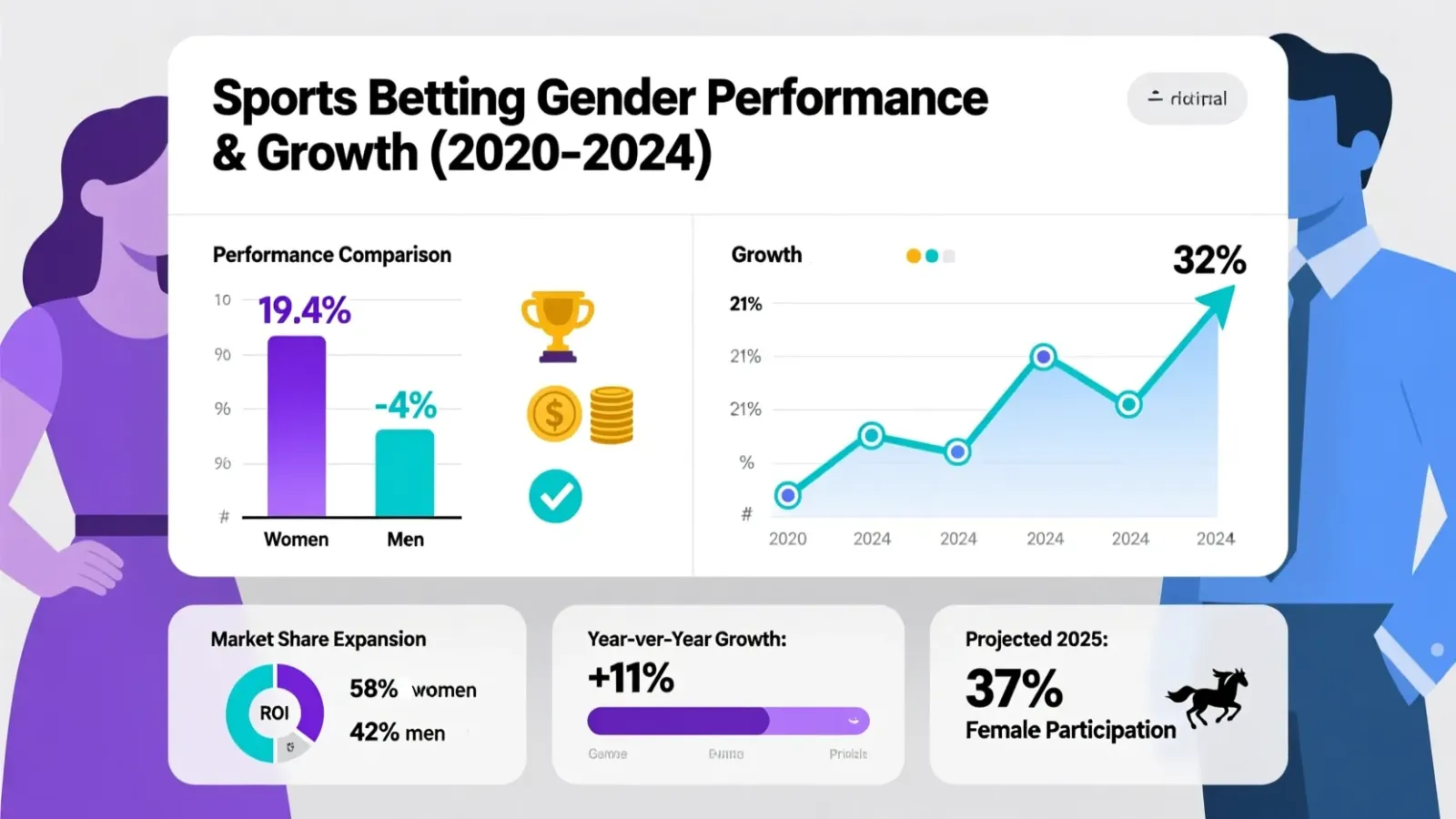 Women achieve 19.4% ROI compared to men's -4%, with steady growth from 21% to 32% market share (2020-2024)
The motivations for betting differ substantially between men and women, and understanding your own reasons matters more than most beginners realize. According to comprehensive survey data, men overwhelmingly cite competition (45%) and financial gain (38%) as primary motivations. Women's priorities look different: entertainment (42%) and social engagement (31%) dominate. This isn't about capability or seriousness—it's about what makes betting worthwhile in the first place.
When entertainment drives your betting, you're more likely to bet on games you actually want to watch. This creates natural guardrails. You're not chasing random opportunities across leagues you don't follow. You're not betting NBA Summer League at 2am because the odds looked interesting. You're betting on events that already have your attention. This constraint functions as discipline without feeling restrictive.
Social engagement as motivation means betting often connects to watching games with friends, following teams your community cares about, or participating in broader conversations about sports. This social dimension provides built-in accountability. It's harder to spiral into problem gambling when your betting is visible to people who know you. The community aspect also means you're exposed to different perspectives and approaches, which tends to improve decision-making over time.
Financial gain as a secondary motivation rather than primary driver changes risk tolerance significantly. If you're betting primarily to make money, every loss feels like failure. The pressure to chase losses or bet beyond your means intensifies. When entertainment comes first, losses are closer to the cost of any other entertainment. You expected to pay something for the experience. Losses still sting, but they don't trigger the same desperation to "fix" them immediately.
Competition drives betting behavior in specific ways too. Men who bet primarily for competition often focus on beating the book or proving their knowledge superior to others'. This creates useful motivation for deep research, but it also encourages ego-driven decisions. Women's lower emphasis on competition correlates with being more willing to skip bets that don't offer clear value. There's less psychological need to be "in action" constantly.
Understanding your own motivations honestly helps you set appropriate expectations and boundaries. If you're betting primarily for entertainment, your bankroll should reflect entertainment budgets, not investment capital. If social engagement matters most, group bets or shared pools might satisfy you more than solo action. If financial gain is actually your primary goal despite betting being framed as entertainment, acknowledging that explicitly means you need to approach it with corresponding seriousness—or reconsider whether betting is the right vehicle for that goal.
The data showing women's better returns likely connects directly to these motivation patterns. Entertainment-focused betting naturally limits frequency. Social betting creates informal accountability. Lower emphasis on competition reduces ego-driven mistakes. These aren't guarantees of success, but they're structural advantages that explain the performance gap at scale.
None of this suggests women should avoid competitive betting or financial goals. Some female bettors absolutely approach betting as serious income generation. The point is recognizing that whatever your motivation, it should inform your strategy, not be ignored in favor of generic advice designed for different goals.
The Psychology Behind Female Betting Success
 Strategic thinking, patience, and emotional control drive better betting outcomes
The psychological differences that contribute to women's betting success aren't mysterious, but they do require honest examination of how decisions actually get made under pressure. Loss aversion—the tendency to feel losses more acutely than equivalent gains—affects everyone but manifests differently in betting behavior based on broader risk preferences and decision-making styles.
Women's documented lower risk tolerance in financial contexts translates directly to betting strategy. A 2023 study published in the Journal of Gambling Studies found that women were significantly more likely to pause and reassess after losses rather than immediately placing follow-up bets. This automatic pause functions as protective circuit breaker. The urge to chase losses remains, but the willingness to act on that urge immediately is lower. That gap between impulse and action is where better decisions happen.
The concept of "going on tilt"—making increasingly reckless decisions after losses—is well-documented in poker and sports betting. Men's higher rates of tilt-induced losses correlate with both higher average betting frequency and that competition-driven motivation discussed earlier. When you frame betting as proving your knowledge or beating others, losses attack your self-concept directly. The emotional spike demands immediate response. Women's lower emphasis on competition as motivation means losses remain disappointing but less identity-threatening. This psychological distance enables clearer thinking.
Research depth shows interesting patterns too. The stereotype that women over-research before acting has some basis in betting behavior, though "over-research" is the wrong frame. The study from University of New Haven noted that women spend more time per bet researching but place fewer total bets. The calculation is simple: more research time divided by fewer bets means more research per bet. This isn't inefficiency—it's selectivity. Each bet gets more attention because there are fewer of them to track.
This connects to what psychologists call "maximizing versus satisficing." Maximizers try to make optimal decisions by evaluating all options thoroughly. Satisficers look for "good enough" options and move forward. Neither approach is inherently superior, but maximizing works better for infrequent, high-stakes decisions while satisficing works better for frequent, lower-stakes ones. Women's tendency toward fewer, larger, more-researched bets aligns perfectly with maximizing behavior. Men's more frequent, smaller bets align with satisficing. The problem is sports betting rewards maximizing more than satisficing, because edge compounds over time.
Emotional regulation plays a direct role too. The ability to sit with uncomfortable feelings without acting impulsively is essentially what discipline looks like in betting contexts. Women's generally higher scores on emotional intelligence assessments (though with large individual variation) correlate with better bankroll management and more consistent adherence to predetermined betting rules. Setting a rule is easy. Following it when you're frustrated or excited is hard. Emotional regulation is what makes the rule work.
The social dimension of women's betting creates informal accountability structures that help maintain psychological discipline. If you discuss your bets with friends or betting communities, you're implicitly committed to explaining your reasoning. This social accountability makes it harder to make purely emotional decisions because you'll have to justify them to others. Men's more solitary betting patterns reduce this external check on impulse control.
None of this suggests women are immune to the psychological pitfalls of betting. Problem gambling affects women too, and the research shows women who develop gambling problems often do so more quickly than men—a phenomenon called "telescoping." The psychological advantages women show on average aren't protective guarantees. They're statistical tendencies that can inform strategy but don't replace vigilance.
The practical implication is recognizing these psychological patterns in yourself and working with them rather than against them. If you naturally pause after losses, honor that instinct rather than forcing action. If you prefer thorough research, lean into that preference rather than trying to bet more frequently to match some imagined standard. If social accountability helps you stay disciplined, build that into your approach explicitly.
Understanding betting psychology isn't about developing perfect emotional control. It's about recognizing your patterns, acknowledging your triggers, and building structures that make good decisions easier and bad decisions harder. Women's better average returns suggest many female bettors are already doing this intuitively. Making it explicit and intentional improves outcomes further.
Platforms and Tools: Where to Begin
 Choose betting platforms with intuitive interfaces, strong educational resources, and comprehensive women's sports coverage
Choosing where to bet matters as much as choosing what to bet on. The U.S. sports betting market has exploded since 2018's Supreme Court decision allowing states to legalize sports wagering, but not all platforms serve all users equally well. For women specifically, platform differences show up in interface design, educational resources, customer service quality, and how platforms approach women's sports coverage.
FanDuel leads the industry with 39% female customer base—the highest among major sportsbooks. This didn't happen by accident. FanDuel invested heavily in user experience research specifically focused on what female bettors wanted, and the results show in interface clarity and educational content quality. The platform emphasizes clean layouts over cluttered odds tables, provides extensive explanations of bet types, and has actively partnered with women's sports leagues including the WNBA. If you're starting from zero, FanDuel offers the gentlest learning curve.
Caesars Sportsbook runs close behind with 38% female users. Caesars' approach emphasizes rewards programs—something that resonates with women's documented preference for value-added features beyond pure odds shopping. The platform's integration with Caesars Rewards means betting activity earns benefits usable at their casino properties and entertainment venues. If you already engage with Caesars properties for other entertainment, the consolidated ecosystem makes sense.
Fanatics Sportsbook is newer but growing quickly by leveraging Fanatics' existing relationship with sports fans generally and female sports fans specifically. Their merchandise integration—where betting activity can earn gear from your favorite teams—creates tangible rewards beyond cash. For women who already shop Fanatics for team apparel, the connected experience feels natural. The betting interface itself is still maturing compared to established competitors, but the growth trajectory is notable.
DraftKings and BetMGM dominate overall market share but haven't differentiated themselves specifically for female bettors the way FanDuel has. Both offer solid platforms with competitive odds, extensive markets, and strong mobile apps. If you prioritize having the most betting options available or you're betting more seriously and want the deepest markets, these platforms work fine. They simply haven't gone out of their way to create female-focused features or marketing.
Beyond the major platforms, several specialized services deserve attention. BettingLadies is an educational platform and community specifically for women bettors. It's not a sportsbook itself but rather a resource hub offering betting guides, research tools, community forums, and partnerships with academic researchers studying female betting behavior. If you want to connect with other women bettors and access resources designed specifically for women's betting education, BettingLadies is worth exploring.
For women's sports betting specifically, no platform has comprehensively solved the coverage gap yet. WNBA, NWSL, women's tennis, and other women's sports receive less betting attention than men's equivalents, which means markets are often limited to basic moneylines and occasional spreads. FanDuel and DraftKings offer the most extensive women's sports betting options currently, but even they're inconsistent across different sports.
When evaluating platforms, several criteria matter beyond brand name:
Interface clarity beats feature density. A platform with fewer features explained clearly serves you better than one with unlimited options presented confusingly. You're going to be making decisions quickly, often on mobile, sometimes while watching games. If the interface creates friction or confusion, you'll make mistakes.
Educational resources matter more at the beginning but remain useful throughout. Platforms that explain bet types clearly, provide historical data for research, and offer transparent information about odds and probability are investing in customer education rather than just customer acquisition. FanDuel's betting guides and explanatory content represent the industry standard here.
Customer service quality becomes critical when problems arise. Bets will settle incorrectly occasionally. Deposits will have issues. Promotions won't credit properly. How the platform handles these situations matters. Read recent reviews specifically about customer service experiences, not just interface preferences or promotional offerings.
Responsible gambling tools should be prominent and functional. Every legitimate platform offers deposit limits, wagering limits, time limits, and self-exclusion options. But implementation quality varies. The best platforms make these tools easy to find, easy to set, and impossible to circumvent impulsively. If responsible gambling tools are hidden in settings menus and require multiple confirmations to activate, the platform isn't taking this seriously.
Withdrawal speed and reliability matters more than deposit bonuses. Platforms compete aggressively on promotional offers—free bets, deposit matches, odds boosts. These promos have value but shouldn't drive platform selection. What matters more is whether you can withdraw your money smoothly when you want it. Research withdrawal processes and timelines before depositing significant amounts.
Geographic availability limits options based on where you live. Not all states have legalized sports betting yet, and even in legal states, not all platforms operate everywhere. Check your state's legal situation and which platforms hold licenses there before investing time comparing features of platforms you can't actually use.
Starting your sports betting journey means choosing a platform, but it doesn't mean committing permanently. Many successful bettors use multiple platforms to compare odds (called "line shopping") and access different markets. But start with one platform, learn it thoroughly, understand how it works, and develop good habits before expanding. Trying to learn betting while simultaneously juggling three different apps creates unnecessary confusion.
The best platform for you depends on your priorities. If you want the easiest learning experience and best women's sports coverage, start with FanDuel. If rewards program integration matters, try Caesars. If you want access to the deepest markets and most betting options, consider DraftKings. But whatever you choose, spend time exploring the educational resources and practice with small bets before scaling up.
Betting Basics: Understanding Odds and Types
Sports betting terminology can feel like learning a new language, but the core concepts are straightforward once you understand the underlying logic. American odds, which dominate U.S. sportsbooks, express everything in relation to $100, though you can bet any amount you want. Understanding how odds work is foundational to making any informed betting decision.
Moneyline odds show which team is favored and what you'd win on a $100 bet. Favorites display negative numbers—like -150 means you need to bet $150 to win $100. Underdogs show positive numbers—like +200 means you win $200 on a $100 bet. If you bet $50 instead of $100, the payouts scale proportionally. The negative number tells you how much to risk to win $100; the positive number tells you how much you win for risking $100.
The moneyline is the simplest bet type: pick who wins the game. No point spreads, no complications. If your team wins, you win. If they lose, you lose. The tradeoff is that favorites pay less than underdogs because favorites are more likely to win. A -150 favorite offers less reward because it's less risky. A +200 underdog offers more reward because it's riskier. This risk-reward relationship is fundamental to all sports betting.
Point spread betting attempts to level the playing field. Instead of picking the winner straight up, you're betting on whether the favorite wins by more than a specified margin or whether the underdog loses by less than that margin (or wins outright). A spread of -6.5 means the favorite must win by at least 7 points for bets on them to pay. Bets on the underdog (+6.5) win if they lose by 6 or fewer points or win the game outright.
Spreads typically offer odds close to even (often -110 on both sides), meaning you risk $110 to win $100 regardless of which side you take. The sportsbook's profit comes from that -110 odds rather than from betting imbalances. This is "the vig" or "juice"—the built-in fee for using the platform. Understanding the vig matters because it represents the baseline cost you must overcome to be profitable.
Over/under betting (also called totals) asks whether the combined score of both teams will exceed or fall short of a number set by the sportsbook. If the total is set at 145.5 for a WNBA game, you can bet over if you think the teams will combine for 146+ points or under if you think they'll combine for 145 or fewer. The half-point prevents ties. Over/under bets also typically carry -110 odds on both sides.
Totals betting requires completely different analysis than moneylines or spreads. You're not picking a winner—you're predicting scoring volume. Pace of play, defensive strategy, weather (for outdoor sports), and other factors that don't necessarily correlate with game outcome become relevant. Some bettors prefer totals specifically because it removes bias about which team they want to win.
Parlays combine multiple bets into one wager where all selections must win for the parlay to pay. A three-team parlay requires all three teams to cover for you to win, but if they do, the payout is much larger than betting each game separately. The math is deceptive though. If you have three bets each with 50% chance of winning, the probability of all three hitting is .5 x .5 x .5 = 12.5%. Parlays offer bigger payouts because they're exponentially harder to win.
Recreational bettors love parlays because small bets can win large amounts and because tracking multiple games simultaneously is entertaining. Serious bettors generally avoid them because the compounding probability makes them unprofitable long-term. The entertainment value of parlays is real, but understanding they're negative expected value bets matters for setting appropriate expectations and bankroll allocation.
Prop bets (proposition bets) focus on specific events within games rather than final outcomes. Will a specific player score over/under 20.5 points? Will there be a defensive touchdown? Which team scores first? Props range from skill-based to essentially random. Some props offer excellent value if you have specialized knowledge. Others are purely entertainment gambles with no edge available.
Live betting (in-game wagering) allows betting after games start, with odds adjusting constantly based on what's happening. If a favored team falls behind early, their live odds become more favorable as the probability of their comeback appears lower. Live betting opens strategic opportunities but also creates more chances for impulsive decisions. The convenience of betting from your phone while watching a game makes it easy to chase losses or bet beyond your planned bankroll.
Futures betting involves outcomes decided far in the future—championship winners, season award winners, win totals, etc. A WNBA Finals bet placed in May won't settle until September. Futures tie up your money for extended periods, but they offer unique strategic opportunities. Early-season futures can provide value before the broader market catches up to team quality. Late-season futures let you hedge positions or capitalize on specific information advantages.
Understanding odds calculation helps you evaluate whether a bet offers value. If you believe a team has 40% chance of winning but the odds imply only 35%, that's a value bet regardless of whether the team actually wins. Over many bets, exploiting these value opportunities produces profit even when individual bets lose. This is the core insight separating profitable bettors from everyone else.
Calculating implied probability from American odds takes practice but becomes automatic. For favorites (negative odds), divide the odds by odds plus 100. For underdogs (positive odds), divide 100 by odds plus 100. These calculations show what probability the odds reflect. If your assessment differs significantly from the implied probability, you've found potential value—or you're overconfident in your analysis.
The most common beginner mistake is betting types they don't fully understand. If spreads confuse you, stick with moneylines until spreads make sense. If you're not sure how parlays pay out, don't bet them until you've calculated the math yourself. Betting should never feel like guessing. If you're not confident explaining why a specific bet makes sense, don't make it. This simple rule prevents most amateur mistakes.
Women's Sports: The Efficiency Advantage
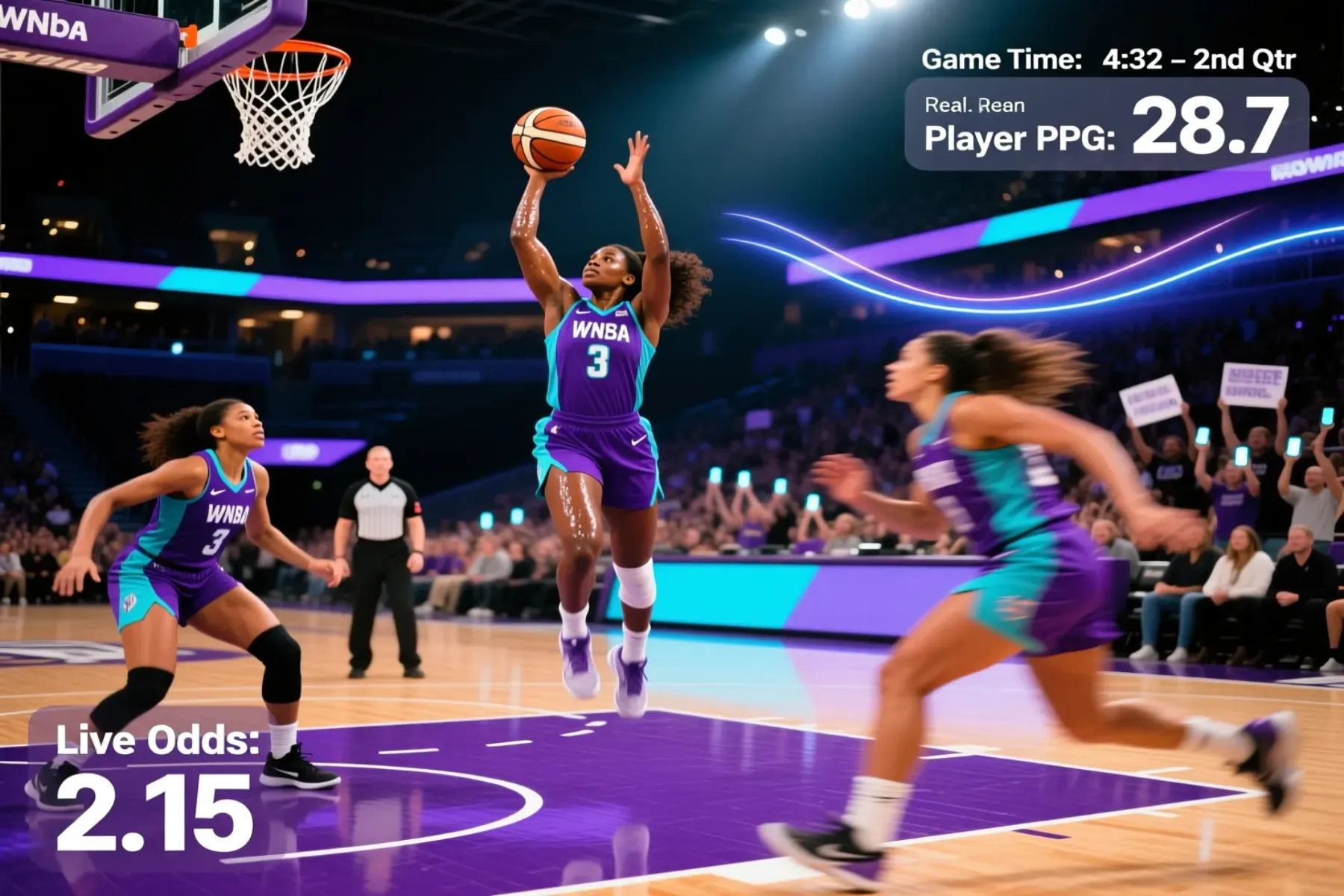 Women's sports markets offer efficiency advantages for knowledgeable bettors
Betting on women's sports offers structural advantages that don't exist in heavily bet men's sports markets. These advantages stem from inefficiency—the betting market hasn't fully incorporated all available information about women's sports yet, which creates opportunities for bettors who do their homework. Understanding why this inefficiency exists and how to exploit it ethically requires examining both the sports themselves and the betting markets around them.
The WNBA provides the clearest example. The league has 12 teams playing 40 regular season games each, followed by playoffs. Betting volume on WNBA games represents a small fraction of NBA volume, which means oddsmakers dedicate less resources to setting precise lines. The sophisticated betting syndicates that immediately pounce on soft NBA lines don't pay the same attention to WNBA. This creates a window where informed recreational bettors can find value.
Women's basketball stylistically differs from men's basketball in ways that affect betting analysis. Lower average heights mean three-point shooting becomes relatively more important. Shorter shot clocks in women's basketball (30 seconds vs 24 in NBA) affect pace calculations. The talent distribution across WNBA teams is less flat than NBA—top teams dominate more consistently because the smaller league concentrates elite talent. Understanding these differences matters for handicapping.
The WNBA season runs May through September, providing betting opportunities during baseball's long season when basketball fans might otherwise have limited options. This timing means WNBA bettors face less competition from casual bettors who only pay attention during major men's sports seasons. The committed bettors who follow WNBA specifically often know more than the oddsmakers, which is rare in sports betting.
Women's tennis offers different advantages. WTA matches receive extensive betting action during majors (Grand Slams) but much less during routine tour events. The volatility in women's tennis—more upsets, more injury retirements, more variance generally—creates both risk and opportunity. If you follow specific players closely and understand their form, fitness, and surface preferences, you can find edges that casual bettors and algorithm-based oddsmakers miss.
The National Women's Soccer League (NWSL) has grown dramatically in visibility and betting availability. Soccer betting generally offers more diverse markets than American sports—you can bet on corners, cards, exact scores, and dozens of other props beyond just match results. The NWSL's expansion and increasing competitiveness makes betting lines less stable and more exploitable than established leagues like the English Premier League where lines are extremely sharp.
Women's college basketball provides another opportunity, especially during March Madness. The women's tournament receives significant attention, but betting volume pales compared to the men's tournament. This means you can find softer lines on women's games, particularly in early rounds featuring less-covered conferences. Regional knowledge about mid-major programs can translate to real betting edge.
The general principle is that betting markets are most efficient when they receive the most attention, money, and sophisticated analysis. Men's NFL, NBA, and premier European soccer leagues have extremely sharp lines because thousands of professional and semi-professional bettors pour resources into analyzing them. Women's sports markets simply don't receive that level of attention yet. This inefficiency creates opportunity for individual bettors willing to do work that others skip.
Exploiting this efficiency gap requires specific knowledge. You can't just bet women's sports blindly and expect better results. But if you already follow a women's sport closely—maybe you watch WNBA games anyway, or you played competitive soccer and follow NWSL—that knowledge has value in betting markets that casual bettors ignore. Your existing interest becomes legitimate advantage.
Information availability matters too. Women's sports coverage has improved dramatically, but it's still not comparable to men's sports. You won't find ten different podcasts analyzing WNBA trades or twenty articles dissecting NWSL tactics. This limited analysis means the crowd isn't as smart, which means contrarian positions are more likely to be correct. In efficient markets, betting against public consensus is usually wrong. In inefficient markets, it's more viable.
The growth trajectory of women's sports betting suggests this efficiency gap will narrow over time. As WNBA ratings increase, as NWSL expands, as women's soccer and basketball receive more media coverage, betting attention will follow. The opportunity for recreational bettors to find soft lines will gradually disappear. This makes now a particularly good time to develop expertise in women's sports betting before the market matures.
There's an ethical dimension worth considering too. Supporting women's sports through betting activity contributes to the overall betting volume that makes the sports attractive to sportsbooks and media companies. As betting revenue grows, leagues reinvest in player salaries, facilities, and marketing. Your betting activity, in aggregate with others, materially supports the growth of women's sports. This doesn't make betting virtuous, but it does mean your recreational activity aligns with broader gender equity goals in sports.
The practical takeaway is simple: if you have genuine interest in any women's sport, that interest can translate to betting advantage. Don't bet women's sports just because the lines might be softer. Do bet them if you already watch, follow, or play those sports, because your existing knowledge gives you real edge. The combination of personal interest, knowledge advantage, and market inefficiency makes women's sports betting uniquely promising for recreational bettors who do their homework.
Bankroll Management and Responsible Betting
Bankroll management is where betting strategy becomes concrete rather than abstract. Every successful bettor has a clear, explicit understanding of their bankroll—how much they can afford to lose—and a systematic approach to bet sizing. Without this foundation, even perfect game analysis won't produce sustainable results.
Your bankroll is the total amount you've set aside for betting. This money must be money you can lose completely without affecting your life. Not money you hope you won't lose. Not money you're "pretty sure" you won't need. Money whose complete loss would be disappointing but not financially damaging. If losing your entire bankroll would mean not paying rent, not covering bills, or not handling emergencies, you don't have a betting bankroll. You have a problem waiting to happen.
Setting your initial bankroll requires honest assessment of your finances. A common guideline suggests your betting bankroll should never exceed 5% of your annual discretionary income—the money left after all bills, savings, retirement contributions, and reasonable living expenses. If your annual discretionary income is $10,000, your betting bankroll shouldn't exceed $500. This might feel restrictive, but it's protective. Betting should never threaten financial security.
Unit sizing determines how much you bet per game as a percentage of your bankroll. Most experienced bettors use 1-5% of their bankroll as one unit and bet 1-3 units per game depending on confidence level. If your bankroll is $1,000, one unit might be $20 (2% of bankroll). A normal bet might be one unit ($20). A high-confidence bet might be two units ($40). You should almost never bet more than 5% of your bankroll on a single game regardless of confidence level.
Conservative unit sizing protects against variance—the statistical reality that even good bets lose sometimes. If you bet 20% of your bankroll per game, you can go broke after just five consecutive losses even if you're a profitable bettor long-term. Variance is inevitable. Unit sizing ensures variance doesn't eliminate you before your edge can express itself over sufficient sample size.
Adjusting unit sizes as your bankroll changes maintains proper risk management. If you grow your $1,000 bankroll to $1,500, your units should increase proportionally. If you fall to $750, units should decrease. This sounds obvious, but many bettors resist decreasing bet sizes when losing because it feels like "not trusting themselves" or "being scared." This is ego talking. Proper bankroll management requires adjusting to reality, not maintaining fixed bet sizes for psychological reasons.
Separate your bankroll from other money completely. Use a dedicated account or cash reserve that's physically separate from daily finances. This separation serves multiple purposes: it makes tracking easy, it prevents accidentally dipping into betting money for other purposes, and it makes wins and losses concrete rather than abstract. When your betting account hits zero, you're done until you can properly fund it again.
Set limits on every platform you use immediately upon signing up. Deposit limits, wagering limits, and time limits aren't admissions of weakness. They're smart risk management. Every platform offers these tools. Use them. Set daily, weekly, and monthly limits below your bankroll size to prevent impulsive decisions from destroying your disciplined approach.
The concept of "scared money" is real and destructive. If you're betting with money you can't afford to lose, the emotional pressure distorts decision-making. You make risk-averse choices when aggression makes sense. You make desperate choices when patience makes sense. You chase losses because you "need" to recover them. Scared money loses. Betting only money you can afford to lose eliminates this pressure and allows rational decision-making.
Responsible gambling means monitoring for warning signs that betting is becoming problematic. Are you betting more than your predetermined limit? Are you chasing losses? Are you hiding betting activity from partners or family? Are you feeling irritable when you can't bet? Are you borrowing money to fund betting? Do you think about betting constantly? Any "yes" answer suggests problems developing.
Women develop problem gambling at lower rates than men but faster once it starts—that "telescoping" phenomenon mentioned earlier. The transition from recreational betting to problem gambling can happen quickly. If you notice any warning signs, take immediate action. This might mean setting stricter limits, taking a break from betting entirely, or seeking professional help.
Resources for problem gambling are free, confidential, and effective. The National Council on Problem Gambling (1-800-522-4700) provides 24/7 support. Gamblers Anonymous offers peer support groups. Most states with legal betting also provide resources through their gaming commissions. These services exist because problem gambling is common enough to warrant systematic support. Using them when needed is smart, not shameful.
Self-exclusion is the strongest available tool if betting becomes problematic. Every legal sportsbook allows self-exclusion, which bans you from the platform for a specified period (typically 6 months to 5 years). States also maintain voluntary self-exclusion lists that ban you from all licensed operators in that state. Self-exclusion isn't reversible during the ban period, which is the point. It removes the option to bet impulsively when discipline fails.
Bankroll management and responsible gambling aren't separate concerns. They're integrated approaches to maintaining betting as entertainment rather than letting it become destructive. The statistics showing women's better average returns and lower problem gambling rates suggest many female bettors already practice better bankroll management intuitively. Making it explicit and systematic improves outcomes further.
Common Mistakes to Avoid
Understanding common mistakes helps you recognize them in yourself before they cost you significant money. Most betting mistakes aren't unique to individuals—they're predictable patterns that bettors repeat because the psychological pressures of betting push everyone toward the same errors. Knowing these patterns means you can build specific defenses against them.
Betting with your heart instead of your head is perhaps the most common mistake. You want your favorite team to win, so you convince yourself they offer value even when the analysis doesn't support it. This is bias masquerading as analysis. The solution isn't avoiding betting on favorite teams entirely—sometimes they do offer value. The solution is requiring stronger evidence before betting them and being honest when that evidence doesn't exist.
Overconfidence after winning streaks destroys more bankrolls than anything else. You win five bets in a row and suddenly feel invincible. Your unit sizes creep up. You bet games you haven't researched properly. You chase marginal opportunities because you're "hot." The statistical reality is that winning streaks are variance, not skill confirmation. Good outcomes don't make bad process acceptable. Maintaining consistent process regardless of recent results separates sustainable bettors from everyone else.
Not shopping lines means leaving money on the table. If FanDuel offers Team A at +150 but DraftKings offers them at +160, betting FanDuel costs you money. These differences seem minor per bet but compound dramatically over time. If you make one hundred bets per year and consistently accept odds 10 cents worse than you could get elsewhere, you're voluntarily giving away several percentage points of return. Line shopping requires effort, but it's one of the easiest ways to improve results.
Ignoring context when analyzing statistics leads to bad conclusions. A team averaging 110 points per game sounds strong, but context matters. Are they playing in a high-pace system that inflates possessions? Are they winning close games or blowing out weak opponents? Surface-level statistics without context mislead more than they inform. Good analysis digs into why the numbers look the way they do, not just what the numbers are.
Chasing losses happens to women less often than men, but it still happens. After a bad bet or a losing day, the temptation to immediately make another bet to recover feels overwhelming. This is when mistakes compound. After losses, take breaks. Wait until your emotional state is completely neutral before considering another bet. If you can't wait, you're chasing losses and need to stop entirely for a longer period.
Not keeping detailed records means you're betting blind. Memory is unreliable. You remember big wins and forget grinding losses. A spreadsheet tracking every bet with dates, amounts, odds, and outcomes provides objective truth about your betting performance. If you can't face creating this spreadsheet, that's information about your relationship with betting that you need to acknowledge.
Interactive tool
Record Check & Staking Survival
Find out whether a betting record is skill or variance yet, and what a losing run actually does to a bankroll at each stake size.
Return on everything staked
-
-
Your strike rate
-
Break-even needs
-
Proven yet
-
What each return actually demands at these odds
Standard deviations from luck
-
Bets you would need
-
Why the sample size matters so much: a run of good results and a genuine edge look identical for a long time. At standard pricing you need to win 52.4 percent of your bets simply to stand still, and the gap between that and any realistic edge is small enough that hundreds of bets pass before the two can be told apart. Any return quoted without a bet count attached is not yet a measurement.
Worst run you should expect
-
-
One unit
-
That run costs
-
Of the bankroll
-
Chance of hitting a run this long
Plan for the run, not the average: losing streaks are not a sign that something has gone wrong, they are an arithmetic certainty over any real number of bets. A stake size is only sensible if the worst run you are likely to meet this season still leaves you able to keep betting afterwards. That, rather than the size of any single bet, is what stake sizing is for.
Advanced Strategies: Taking Your Betting to the Next Level
Value betting separates profitable bettors from everyone else, and understanding this concept changes everything about how you evaluate bets. Value exists when the probability of an outcome is higher than what the odds suggest. If you believe a team has a 40% chance of winning, but the odds imply only 35% chance, that's a value bet. The math is simple but finding these opportunities requires sharp judgment.
Calculating implied probability from American odds takes practice but becomes automatic. For favorites, divide the odds by odds plus 100. A team at -150 has implied probability of 150/(150+100) = 60%. For underdogs, divide 100 by odds plus 100. A team at +200 has implied probability of 100/(200+100) = 33.3%. Compare these implied probabilities to your own assessments. When your assessment is significantly higher, you've potentially found value.
The challenge is being honest about your own assessments. Confirming your hunches with actual analysis rather than wishful thinking requires discipline. If you think a team is undervalued, force yourself to articulate exactly why. What specific factors support your view? Can you point to concrete evidence? If your reasoning is vague or emotional, you're probably fooling yourself about the value.
Line shopping becomes essential as you bet more seriously. Different sportsbooks offer different odds on the same games. These differences seem minor but compound dramatically over time. A bettor making one hundred bets per year at consistently better odds by even 10 cents will show significantly better returns than someone using only one platform. The effort of checking multiple apps before each bet pays off mathematically.
Live betting opens entirely different strategic possibilities. Odds shift constantly during games based on events unfolding in real time. If you're watching a game and notice something odds makers haven't adjusted for yet, opportunities emerge. Maybe a key player is clearly injured but staying in the game. Maybe a team's strategy shift is working but the odds haven't moved yet. Live betting rewards attention and quick decision-making.
Prop bets require completely different analysis than game outcomes. You're researching individual player performance rather than team results. This narrows your focus and often plays to knowledge advantages you've developed. If you follow WNBA closely and understand how different players perform in specific matchups, player props let you leverage that knowledge. The key is specializing rather than betting every prop available.
Keeping detailed records becomes even more critical as you develop advanced strategies. Track not just wins and losses but which types of bets perform best for you. Maybe you're profitable on WNBA moneylines but lose money on NFL spreads. This information is gold. Double down on what works for you specifically rather than chasing strategies that work for other people.
Bankroll management evolves with experience but the fundamentals remain. Many successful bettors use the Kelly Criterion—a mathematical formula that determines optimal bet sizing based on your edge and bankroll. The formula is (bp-q)/b where b is odds in decimal form, p is probability of winning, q is probability of losing. This sounds complicated but calculators exist online. The key insight is that bet sizing should correspond to your confidence level and the value available.
The psychological shift to advanced betting means viewing betting as investing rather than gambling. You're looking for edges, managing risk, tracking performance, and making decisions based on data rather than emotion. This doesn't mean betting becomes joyless. It means the joy comes from strategic success rather than random wins.
Most critically, advanced betting requires absolute honesty about results. If your strategies aren't working, change them. If you're not profitable despite using "advanced" approaches, either your execution is flawed or you're not as skilled as you think. The data tells the truth. Listen to it.
The Future of Women in Sports Betting

The trajectory for women in sports betting points in one direction: continued rapid growth. From 21% of the market in 2020 to 32% in 2024, the trend shows no signs of slowing. Industry analysts project women could represent 40-45% of sports bettors by 2027-2028. This isn't just demographic shift—it's fundamental transformation of the entire betting ecosystem.
Sportsbooks are responding with real changes beyond superficial marketing adjustments. Product development now includes significant input from female users. Features that women specifically requested—better educational content, clearer interfaces, stronger responsible gambling tools—are becoming industry standards that benefit all users. The "design for women" approach is actually revealing what good design looks like generally.
Academic interest in female betting behavior is accelerating. The University of New Haven study with BettingLadies represents just one of several research initiatives examining gender differences in gambling. These studies will inform better prevention strategies for problem gambling, more effective marketing approaches, and improved product design. The data emerging from this research consistently shows that conventional wisdom about gambling behavior was based almost entirely on male subjects and doesn't generalize well.
Women's sports betting will continue driving overall market growth. As the WNBA, women's soccer, women's tennis, and other women's sports gain more media coverage and cultural relevance, betting markets will expand correspondingly. The efficiency of these markets will improve, but they'll remain more approachable for recreational bettors than established men's sports markets for at least several more years.
Platform consolidation seems likely as the market matures. Smaller sportsbooks without resources to properly serve female audiences will struggle against major platforms that have invested heavily in this demographic. The winners will be platforms that understood early that women weren't a niche market but rather the growth engine for the entire industry.
Regulatory attention to gender differences in gambling is just beginning. As research documents that women and men develop gambling problems differently, regulations and responsible gambling initiatives will likely adapt to reflect these differences. This could mean different marketing restrictions, different default limits, or different treatment approaches.
The betting community for women will continue professionalizing. BettingLadies and similar platforms will likely expand into more comprehensive educational resources, partnerships with academic institutions, and possibly even professional mentorship programs. The collaborative culture that characterizes women's betting communities could reshape how betting education works generally.
Technology will play a role too. As artificial intelligence and machine learning improve, tools for analyzing bets and managing bankrolls will become more accessible. Women's tendency toward extensive research and data analysis positions them well to leverage these tools effectively.
The future looks less like women conforming to existing betting culture and more like betting culture adapting to accommodate women's preferences and approaches. That's not just good for women—it's good for the industry.
Women’s Sports Betting FAQ: Key Questions and Practical Answers
Q: Do women bet differently than men?
Yes, substantially. Women place larger individual bets on average—$51.10 compared to men's $48.60—but bet much less frequently overall. About 62.5% of female bettors wager less than $100 monthly while 30% of male bettors exceed $500 monthly. Women prioritize entertainment and social engagement over competition and financial gain. They're more likely to pause and reflect after losses rather than immediately chasing them. This different approach results in women achieving positive ROI of 19.4% while men average negative 4%. Women also develop problem gambling at roughly half the rate of men.
Q: Which sportsbooks are most popular among women?
FanDuel leads with 39% female customer base, the highest in the industry. This results from intentional design choices including cleaner interfaces, extensive educational content, partnerships with women's sports leagues, and marketing that respects rather than patronizes female audiences. Caesars follows at 38% female customers, emphasizing rewards programs and professional presentation. Fanatics is growing quickly by leveraging existing relationships with female sports fans. DraftKings and BetMGM have strong overall market positions but haven't differentiated themselves specifically for female bettors yet. Platform choice matters less than finding one with clear interface, good educational resources, strong women's sports coverage, and responsive customer service.
Q: Is sports betting safe for women?
Yes, when practiced responsibly. Women show lower rates of problem gambling than men and are generally better at maintaining disciplined betting approaches. Key safety practices include setting strict budgets before betting, using only disposable income, setting platform limits immediately, taking breaks when betting stops being fun, and seeking help at first signs of problems. Every legitimate sportsbook offers responsible gambling tools including deposit limits, wagering limits, and self-exclusion options. Resources like the National Council on Problem Gambling (1-800-522-4700) and Gamblers Anonymous provide support if needed. The risk isn't the activity itself but rather failing to maintain boundaries and losing sight of betting as entertainment rather than income source.
