 WomenBet
Live Betting Basics
 Available in US

The game has already started. The opening tip happened fifteen minutes ago, and you're watching the Fever push the pace against the Liberty, trading baskets in what's shaping up to be a high-scoring affair. In the old days of betting, you'd be out of luck—pregame windows closed at tipoff, and that was that. But live betting changed everything. Now you can place wagers while the action unfolds, reacting to what you're actually seeing rather than guessing what might happen based on pregame analysis.
Live betting—also called in-play or in-game betting—has exploded in popularity over the past decade, fundamentally altering how people engage with sports wagering. Some estimates suggest it now accounts for over half of all sports betting handle at major sportsbooks. The appeal is obvious: you get to bet based on current reality rather than predictions, you can hedge earlier bets that aren't going well, and frankly, it makes watching games significantly more engaging. But live betting comes with its own set of challenges and pitfalls that differ substantially from pregame wagering. Understanding how to navigate this fast-paced environment is essential before you start clicking on fluctuating odds.
How Live Betting Actually Works
When you place a pregame bet, the odds are relatively stable. They might shift a bit if news breaks or heavy money comes in on one side, but you generally have time to think, compare lines across books, and make a deliberate decision. Live betting operates on an entirely different timeline. Odds update constantly—sometimes every few seconds—based on what's happening in the game. A team that was +150 on the moneyline pregame might be -200 two minutes into the game if they've jumped to an early lead, or +400 if they've fallen behind badly.
Sportsbooks use sophisticated algorithms that process real-time data to generate these shifting odds. The algorithms consider score differentials, time remaining, possession, momentum indicators, and historical patterns about how similar game situations typically resolve. When something significant happens—a goal, a turnover, an injury—the system briefly suspends betting on affected markets while it recalculates. You'll see markets go "offline" or show a spinning indicator, then reappear moments later with adjusted lines.
This speed creates both opportunity and danger. The opportunity is that algorithms can't perfectly capture everything happening on the field. If you're watching closely and notice something the model might be underweighting—a star player looking fatigued, a team's strategy shift that seems effective, weather conditions changing—you might spot value before the odds adjust. The danger is that you're essentially racing against computers, and most of the time, the computers are faster and smarter about pricing.
Another key difference from pregame betting is the available markets. Some bet types you'd find pregame may not be available live, while others become possible only during the game. Live totals adjust based on current scoring pace—if a basketball game is 60-55 at halftime, the live total will be something like "over/under 232.5" rather than the original pregame number. Live spreads reflect current margins plus remaining-game projections. And you'll find proposition bets specific to in-game situations: next team to score, next player to hit a three-pointer, whether there will be a goal in the next ten minutes.
The Unique Advantages of Live Betting
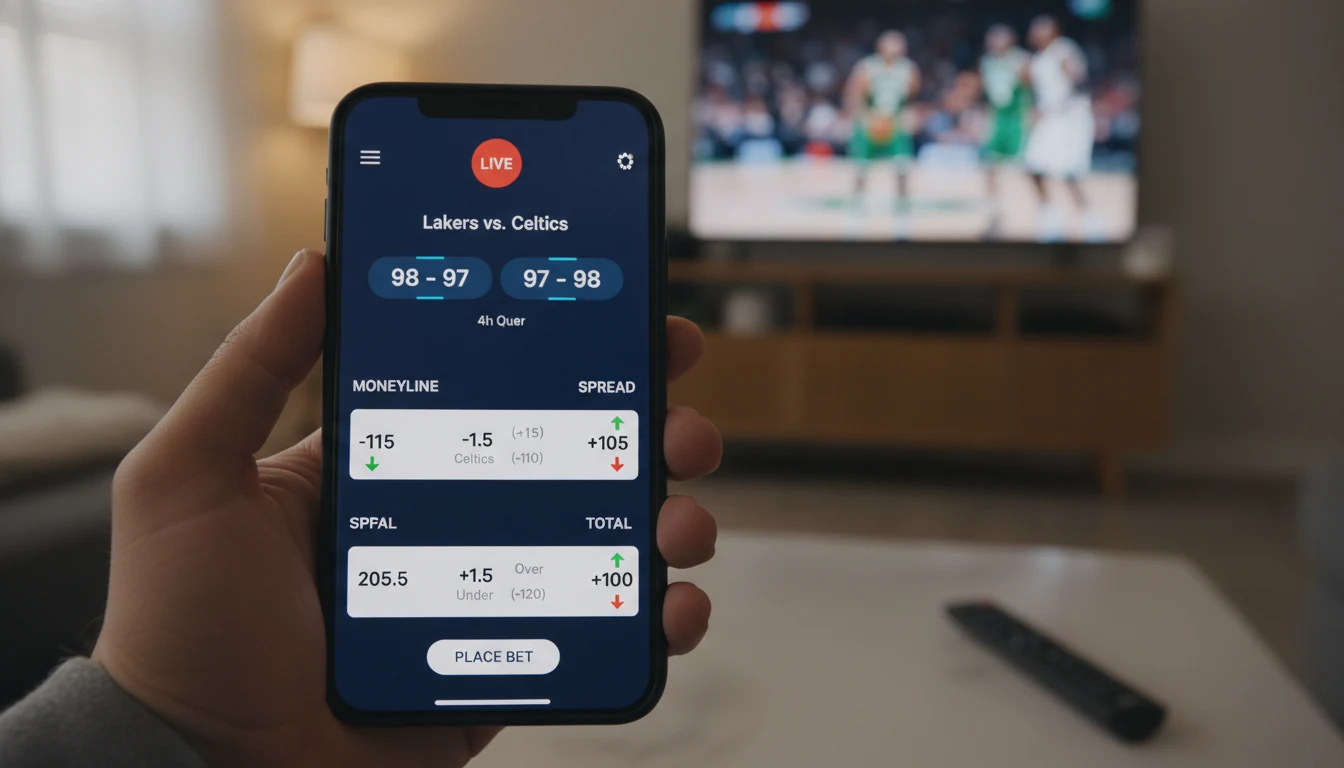
Live betting offers several genuine advantages that thoughtful bettors can exploit. The most fundamental is additional information. Pregame, you're working with projections and expectations. In-game, you're seeing how teams actually match up, who's playing well, and how the game is flowing. That additional data reduces uncertainty—or at least, it can if you know how to interpret what you're watching.
Consider a scenario where you're watching a WNBA game and notice that a key defensive player for the favorite appears to be nursing an injury. She's staying on the court but moving gingerly, and her lateral quickness is clearly compromised. The scoreboard shows her team still ahead, so the live odds favor them. But you've noticed something the algorithm hasn't fully priced: the game dynamics are about to shift as the opposing guards start attacking that matchup. This is the kind of situational edge live betting makes possible.
Hedging represents another significant advantage. If you made a pregame bet and the game is going your way, live betting allows you to lock in guaranteed profit by betting the opposite side at the current odds. Alternatively, if your pregame bet is looking bleak, you can cut losses rather than riding it out. This isn't always the mathematically optimal play—hedging often sacrifices expected value for reduced variance—but it gives you options you wouldn't have otherwise.
Live betting also lets you recover from pregame mistakes. Maybe you bet the under and realized watching the first quarter that both teams are playing much faster than expected. Or you took a team to cover the spread but they've come out flat and look unprepared. Rather than accepting the loss, you can reassess and potentially find value going the other direction in real-time. This flexibility is genuinely valuable, though it requires discipline to avoid compounding errors.
The Significant Risks and Pitfalls
For every advantage live betting offers, there's a corresponding trap waiting to catch undisciplined bettors. The speed and excitement of in-game action create an environment ripe for impulsive decisions, emotional betting, and poor bankroll management. Understanding these risks is as important as understanding the opportunities.
The most common pitfall is chasing losses in real-time. Your pregame bet is going badly, so you make a live bet to "get it back." That bet also goes poorly, so you make another. Before you know it, you've turned one losing bet into three or four, digging a much deeper hole than necessary. The continuous availability of betting options during a game makes this spiral disturbingly easy to fall into. Every possession presents another opportunity to try winning your money back—which is exactly the mindset sportsbooks want you to have.
Latency creates another significant challenge. When you're watching a game on television, there's typically a delay of several seconds compared to the live action. That delay might not matter when you're just enjoying the game, but it matters enormously for live betting. A goal might have been scored seconds before your screen shows it, meaning the odds you're betting on are already stale. Sportsbooks have access to faster data feeds than your TV broadcast, giving them an informational advantage. By the time you see an opportunity and click to bet, the odds may have already moved—or worse, you might make a bet not realizing the situation has already changed.
The speed of live betting also means less time for analysis. You might make twenty decisions in a live betting session that you'd normally spend twenty minutes thinking about pregame. That compressed timeline leads to cognitive fatigue, pattern-matching based on limited data, and reliance on gut feelings rather than reasoned analysis. The research that makes pregame bettors successful doesn't transfer directly to live betting because you simply don't have time to do it.
Strategies for Successful Live Betting
If you're going to engage with live betting, approaching it strategically rather than reactively will substantially improve your results. These aren't guaranteed winning systems—nothing in betting is—but they're principles that help you avoid common mistakes and position yourself for whatever edge might exist.
Watch the game you're betting on. This sounds obvious, but many bettors place live wagers based purely on score updates or statistical feeds without actually seeing what's happening. You're giving up the primary advantage of live betting—real-time observational information—if you're not watching. Turn off distractions, focus on the game flow, and make decisions based on what you're actually seeing rather than what numbers on a screen tell you.
Prepare before the game starts. Identify what scenarios might create live betting opportunities. If you think a heavy favorite might fall behind early but eventually dominate, plan to wait for that situation and bet them live at better odds than pregame. If you expect a slow-starting team to pick up pace in the second half, know what live total or spread lines would represent value. Coming in with a plan prevents you from making random bets based on whatever happens to catch your attention mid-game.
Limit your live betting volume. The continuous nature of in-game markets tempts you to bet constantly—there's always another line, always another opportunity. Resist this temptation. Treat live betting like pregame betting: you're looking for specific situations where you have conviction, not betting on every movement because the option exists. Quality over quantity applies even more strongly in live markets where the speed advantage generally favors the house.
Size your bets appropriately and track everything. Because live betting can happen rapidly and emotionally, it's easy to lose track of how much you're wagering. Before the game, decide how much of your bankroll you're willing to risk on live bets for this particular event. Then stick to that limit regardless of how the game unfolds. Recording your live bets afterward helps you identify patterns in your decision-making—are you more impulsive when your team is losing? Do you perform better in certain game situations? Data about your own behavior is valuable.
Please kindly verify the site map.
When Live Betting Makes the Most Sense

Live betting isn't universally better or worse than pregame betting—it's a different tool suited to different situations. Understanding when in-game wagering offers genuine advantages helps you use it effectively rather than habitually.
Games with high variance in early outcomes are prime candidates. If a favorite often falls behind early before asserting control—common in basketball and soccer—waiting to bet them live at worse odds (from their perspective, better for you) can offer value. You're essentially betting on a pattern you've observed rather than gambling on the pregame outcome.
Situational factors that emerge during games create opportunities. Weather changes in outdoor sports, injury revelations that weren't public pregame, tactical adjustments that clearly favor one side—these are things you can only know by watching. When you have information the pregame line couldn't account for, live betting lets you capitalize.
Hedging scenarios work well in live betting. If you have a futures bet coming down to one game, or a parlay with one leg remaining, live betting lets you manage your exposure rather than sweating out the full outcome. Whether hedging makes sense depends on your risk tolerance and the specific odds, but having the option is genuinely valuable.
On the other hand, avoid live betting when you're emotionally invested in the outcome, when you haven't been watching the game closely, or when you're trying to recover losses. These conditions virtually guarantee poor decision-making. The discipline to walk away from available betting options is one of the most important skills a live bettor can develop—just because you can bet doesn't mean you should.
Building Your Approach
Live betting rewards preparation, observation, discipline, and quick thinking. If those qualities don't describe your betting style, you might find more success concentrating on pregame markets where you have time to research and deliberate. There's no shame in recognizing that the fast-paced live environment doesn't suit your strengths.
But if you enjoy the challenge of real-time decision-making, watching games becomes a skill rather than just entertainment. You'll start noticing patterns in how odds move, situations where the market seems to lag behind reality, and moments when your assessment differs meaningfully from what the lines suggest. Those observations, accumulated over time, can become genuine edge—or at least, the potential for edge.
Start small if you're new to live betting. Place a few low-stakes bets during games you're watching anyway, just to experience how the markets function. Notice how quickly odds change after significant plays. Pay attention to latency between your stream and the betting markets. Get comfortable with the mechanics before you put real money on the line in situations where speed matters.
Live betting isn't necessarily where you'll make your fortune, but it is where you'll find some of the most engaging and dynamic action in sports wagering. Approach it with respect for its unique challenges, and you'll have a much better chance of coming out ahead—or at least, of not coming out dramatically behind.
Control your tilting strongly entirely with women bet.
