 WomenBet
WNBA Betting Guide
 Available in US
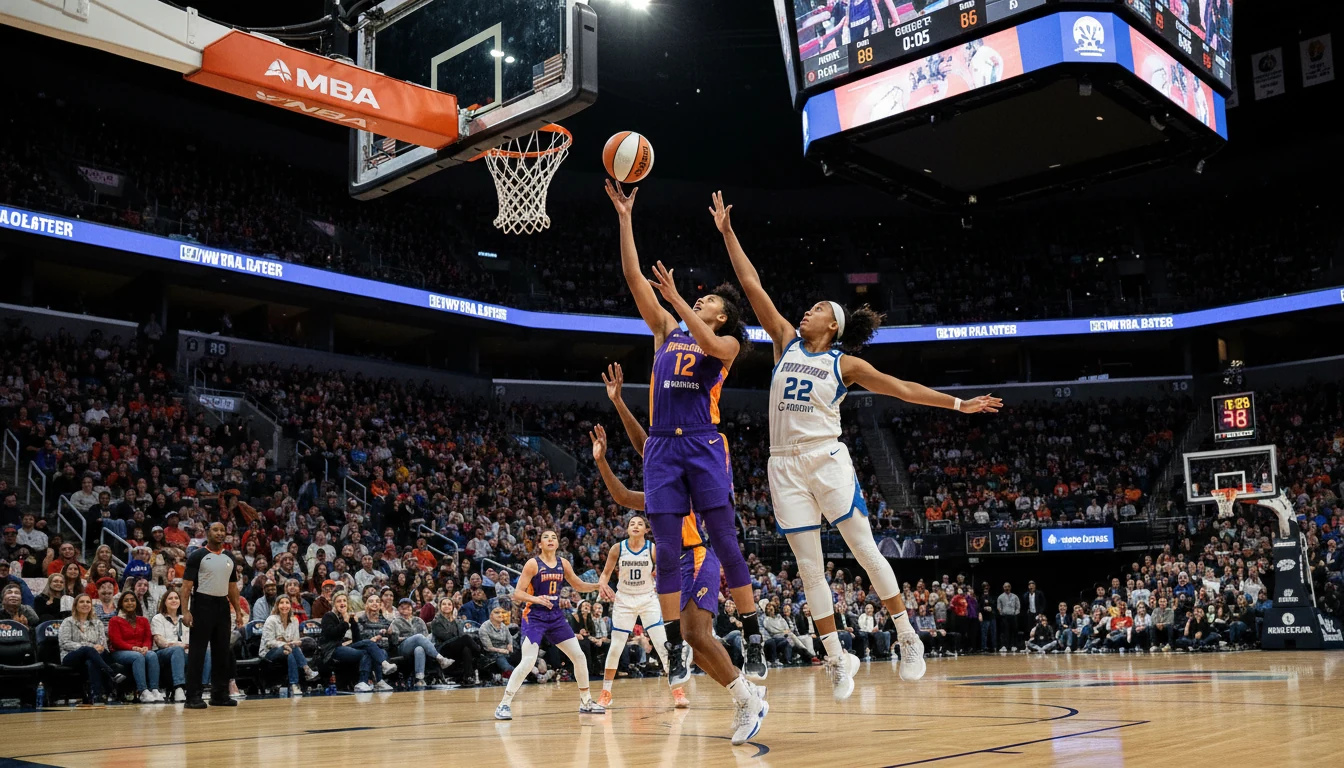
The WNBA is having a moment. Record television ratings, sold-out arenas, and a generation of transcendent stars have pushed women's professional basketball into mainstream consciousness in ways that seemed impossible just a few years ago. For bettors, this surge in popularity creates a fascinating dynamic: a sport generating massive interest but still operating as a relatively inefficient betting market. The sportsbooks that employ armies of analysts to set razor-sharp NBA lines don't dedicate the same resources to the WNBA, and that gap between public attention and market efficiency creates genuine opportunity.
This guide covers everything you need to know to bet on the WNBA intelligently—from understanding how the league operates differently from the NBA to identifying the specific edges that exist in women's basketball betting markets. Whether you're a basketball betting veteran looking to expand into a new market or someone drawn to the WNBA who wants to add some action to your viewing experience, understanding these fundamentals will put you ahead of the casual bettors who treat it like a smaller version of the NBA.
Understanding the WNBA Landscape
The WNBA currently consists of 13 teams playing a 44-game regular season that runs from May through September, followed by playoffs culminating in the WNBA Finals. That's significantly fewer games than the NBA's 82-game schedule, which matters for betting because smaller sample sizes mean more variance and less predictability. A hot streak or cold streak represents a larger portion of a WNBA team's season than it would in the NBA.
Games are 40 minutes long compared to the NBA's 48 minutes, which directly affects totals. You can't simply apply NBA total concepts to WNBA games without adjusting for the shorter duration. Scoring pace, while generally lower than the NBA, has increased substantially in recent years as the league has adopted more spacing-oriented offensive schemes. Understanding current scoring trends rather than relying on outdated assumptions about "low-scoring women's basketball" is essential.
The talent distribution in the WNBA is more concentrated than in the NBA. With only 13 teams, the gap between the best teams and the worst teams can be substantial. Powerhouses like the Las Vegas Aces and New York Liberty consistently dominate, while expansion teams and rebuilding franchises struggle to compete. This concentration creates larger point spreads than you'd typically see in the NBA—double-digit spreads are common, and spreads exceeding 15 points occur regularly. Understanding how to bet in lopsided matchups is more important in the WNBA than in most other professional leagues.
Star player impact is also magnified. In the NBA, superstars matter enormously, but deep rosters can somewhat compensate for a star's absence. In the WNBA, with smaller rosters and shorter benches, losing a player like A'ja Wilson or Breanna Stewart fundamentally changes a team's outlook. Injury news moves lines dramatically, and markets are often slow to adjust to lineup changes. Paying attention to player availability is even more critical here than in men's basketball.
The Market Inefficiency Advantage

Here's the core thesis for WNBA betting: the lines are softer than major men's leagues, creating more opportunities for skilled bettors to find value. This isn't speculation—it's a structural reality based on how sportsbooks allocate resources.
When an oddsmaker makes a pricing error on an NFL game, it can cost the sportsbook millions of dollars in liability. The NFL attracts massive betting volume, and sophisticated bettors pounce on any inefficiency immediately. Sportsbooks respond by employing their sharpest analysts and most advanced models to set NFL lines. The WNBA attracts a fraction of that volume. An error on a Tuesday night WNBA game between mid-tier teams costs the book relatively little, so they invest less in getting those lines perfect.
This means several things for bettors. First, the lines move less efficiently. News about injuries or lineup changes might take longer to be reflected in the odds. Second, the opening lines are more likely to be beatable. Third, the player prop markets—which are even less liquid than sides and totals—can have significant mispricings that persist for hours.
The flip side of this opportunity is that sportsbooks protect themselves from sharp action by limiting bet sizes. You might find a great edge on a WNBA prop, but the book might only let you bet $200 on it rather than the $2,000 you could place on an NBA equivalent. This limits how much you can win on any single opportunity, but it doesn't eliminate the value—it just means you need to be systematic about exploiting smaller edges across many bets rather than swinging for the fences on any single wager.
Key Betting Markets: Spreads, Moneylines, and Totals
The standard betting markets available for WNBA games mirror what you'd find in the NBA, with some important nuances to understand.
Point spreads are the most popular WNBA betting market. As mentioned, spreads tend to be larger than in the NBA, with competitive games sitting around 3-6 points and mismatches regularly hitting double digits. The key skill is understanding when large spreads offer value on the favorite versus when the underdog has a realistic path to covering. Blowouts are more common in the WNBA than the NBA, partly due to talent concentration and partly because coaches are less likely to empty their benches in garbage time. With shorter seasons and fewer games, playing starters deeper into blowouts is more common.
Moneyline betting on favorites can be expensive, just like in other sports. A team laying -8.5 on the spread might be -350 or worse on the moneyline, meaning you're risking $350 to win $100. This pricing rarely offers value unless you have strong conviction the favorite will win but might not cover a large spread. Underdog moneylines offer the inverse opportunity—getting plus-money on a team you believe has a legitimate upset chance.
Totals reflect the 40-minute game format and vary considerably based on matchup. Fast-paced teams with high-powered offenses can push totals into the 170s or even low 180s, while defensive-oriented matchups might sit in the 150s. Tracking pace and offensive efficiency for specific teams helps you identify when totals are mispriced. The market has generally gotten better at setting totals, but specific matchup dynamics still create opportunities.
Futures betting—championship odds, MVP, and similar season-long markets—provides another avenue. The concentrated talent means favorites dominate more often than in leagues with deeper competition, so don't expect huge payoffs from betting heavy favorites to win the title. Instead, look for value in teams that might be underrated preseason or player props for awards where the field is less settled.
Player Props: The Softest Market
If there's a single area where WNBA betting edges are most pronounced, it's player proposition bets. These markets—over/under on points, rebounds, assists, and combined stats for individual players—attract less betting volume and receive less attention from sportsbooks than any other WNBA market.
The result is lines that can be significantly mispriced. A star player's points prop might be set without fully accounting for the specific matchup, her team's recent pace changes, or usage patterns that suggest she'll have an unusually high or low night. These are exactly the kinds of nuances that NBA prop bettors have mostly priced out of men's basketball markets, but they persist in the WNBA.
Working with player props requires tracking individual player statistics more granularly than team-level analysis demands. Know the league's leading scorers and their consistency—does a player score 20 every night, or does she alternate between 30-point explosions and 12-point quiet games? Understand usage rates and how they change when teammates are out. Follow minutes distributions, which are more volatile in the WNBA than the NBA due to smaller rotations.
One caution: because the prop market is relatively thin, sportsbooks are quick to limit or ban bettors who consistently win on WNBA props. If you start crushing this market, spread your action across multiple books and avoid patterns that make your edge obvious. The opportunity exists precisely because it's small-scale—don't burn your accounts by being too aggressive.
Building Your WNBA Betting Approach

Successful WNBA betting starts with the same fundamentals as any sports betting: research, discipline, and bankroll management. But the specific research process differs from what you might do for NBA or football betting.
Start by learning the teams and key players. With only 13 franchises, getting a working knowledge of the entire league is manageable. Know which teams play fast and which grind out defensive battles. Identify the star players on each roster and understand their typical statistical outputs. Follow injury reports closely—the WNBA doesn't have the same robust injury reporting infrastructure as major men's leagues, but team beat reporters and league announcements provide useful information.
Use available data resources. Basketball-Reference.com covers the WNBA with the same statistical depth as the NBA. The official WNBA website provides game logs, advanced stats, and standings. While the analytics community is smaller than in men's basketball, there's enough data to build meaningful models if you're inclined toward that approach.
Watch games when possible. The eye test matters in any sport, and WNBA games are genuinely entertaining basketball. You'll pick up on intangibles—team chemistry, coaching tendencies, how certain matchups play out—that don't fully show up in the numbers. Plus, you're supporting a league that deserves more attention and investment.
Shop for the best lines. With WNBA markets being less efficient, the spread between best and worst available odds can be wider than in major men's leagues. Having accounts at multiple sportsbooks lets you capture the best number available for any given bet. A half-point here and a better moneyline price there compounds significantly over a season of betting.
Better understand essential betting psychology rules.
Common Mistakes to Avoid
Bettors transitioning from NBA betting make predictable errors when they first approach the WNBA. Avoiding these mistakes gives you an immediate advantage over casual bettors.
Don't assume the same totals logic applies. WNBA games are eight minutes shorter than NBA games, which significantly impacts scoring. Additionally, the style of play differs—while the WNBA has become more perimeter-oriented, it's not simply a smaller version of NBA basketball. Calibrate your expectations to actual WNBA scoring patterns rather than scaling down from what you expect in men's games.
Don't ignore the roster differences. WNBA teams carry fewer players, and rotations are shorter. The gap between starters and bench players can be more pronounced. When a starter is out, the dropoff is often steeper than you'd see in the NBA. Factor this into your analysis, particularly for player props.
Don't treat all WNBA games as equivalent. The league has significant competitive imbalance. Betting a top-four team against an expansion franchise is fundamentally different from betting a matchup between playoff contenders. Adjust your expectations and approach based on the specific game's competitive context.
Don't fade public sentiment blindly. Yes, the influx of casual interest from fans of star players like Caitlin Clark creates public betting patterns. But assuming you should automatically bet against popular teams or players isn't a strategy—it's lazy contrarianism. Evaluate each situation on its merits rather than assuming the public is always wrong.
The Long-Term Opportunity
WNBA betting offers a rare combination: a growing sport with mainstream interest and media coverage, but betting markets that haven't fully caught up to that popularity. This gap won't last forever—as betting volumes increase, sportsbooks will dedicate more resources to sharpening their lines. The window of opportunity, while still open, is narrowing.
For now, bettors willing to do the work can find genuine edges that have largely been arbitraged away in major men's leagues. The season runs through summer months when other betting options are limited to baseball and golf. The games are fun to watch, the stars are compelling, and the potential for profit is real.
Build your knowledge base now. Develop your approach during this season. By the time the WNBA becomes as efficiently priced as the NBA, you'll have years of experience and data that give you advantages over newcomers. That's the real opportunity—not just making money today, but positioning yourself as someone who deeply understands a market that's only going to grow.
Use highly accurate predictions from women bet.
