 WomenBet
How to Place Your First Sports Bet
 Available in US

There's a particular kind of anxiety that comes with doing something for the first time, especially when money is involved. Opening a sportsbook app and staring at the interface—buttons everywhere, numbers that look like they mean something important, promotional banners demanding attention—can trigger the same overwhelmed feeling as walking into a foreign airport with signs in a language you don't speak. The good news is that placing a sports bet is considerably less complicated than international travel, and you won't need a passport. What you will need is about fifteen minutes, some basic personal information, and a willingness to follow a few straightforward steps.
This guide walks you through the entire process from downloading an app to watching your first bet settle. We're not going to assume you know anything, because there's no shame in starting from zero. Every sharp bettor who's ever made serious money started exactly where you are now—confused but curious. The difference between people who figure it out and people who give up is simply whether they had someone explain things clearly. Consider this that explanation.
Step One: Verify Sports Betting Is Legal in Your State
Before you invest any time in this process, confirm that online sports betting is actually legal where you live. As of late 2025, more than thirty states have legalized mobile sports betting, but the rules vary significantly. Some states allow betting on professional sports only, others include college games but restrict betting on in-state schools, and a few require you to register in person at a casino before you can bet online.
The simplest way to check is to visit the website of any major sportsbook like FanDuel or DraftKings and try to create an account. The site will use your IP address to determine your location and tell you immediately if you're in an eligible state. If you're not, you'll get a polite but firm message explaining that betting isn't available in your area. Don't try to get around this with VPNs or other workarounds—sportsbooks use sophisticated geolocation technology, and attempting to circumvent it can get you banned permanently and your funds frozen.
Assuming you're in a legal state, you'll also need to meet age requirements. Most states require you to be 21 or older, though a handful allow betting at 18. The sportsbook will verify your age during registration using the information you provide, so don't bother trying to fudge your birthdate. They cross-reference multiple databases and will catch discrepancies.
Step Two: Choose Your Sportsbook and Download the App
With dozens of legal sportsbooks competing for your business, choosing one might feel overwhelming. Here's a practical approach: start with one of the major, well-established operators like FanDuel, DraftKings, BetMGM, or Caesars. These companies have spent years refining their apps, offer reliable customer service, and aren't going anywhere. You can always explore smaller or niche sportsbooks later once you're comfortable with the process.
FanDuel consistently ranks highest for user experience and has the largest female customer base in the industry—nearly 40%—suggesting they've done something right in making their platform accessible. DraftKings offers deep betting markets and frequent promotions. BetMGM connects to the MGM Rewards program if you ever visit their casinos. Caesars similarly integrates with their loyalty program. Pick whichever appeals to you; you'll likely end up with accounts at multiple books eventually for line shopping purposes.
Download the app directly from the Apple App Store or Google Play Store—never from a random link you find online. Fake sportsbook apps exist and they will absolutely steal your money. Once downloaded, open the app and look for a button that says "Join," "Sign Up," or "Register." It's usually prominently displayed because sportsbooks very much want you to create an account.
Step Three: Complete the Registration Process
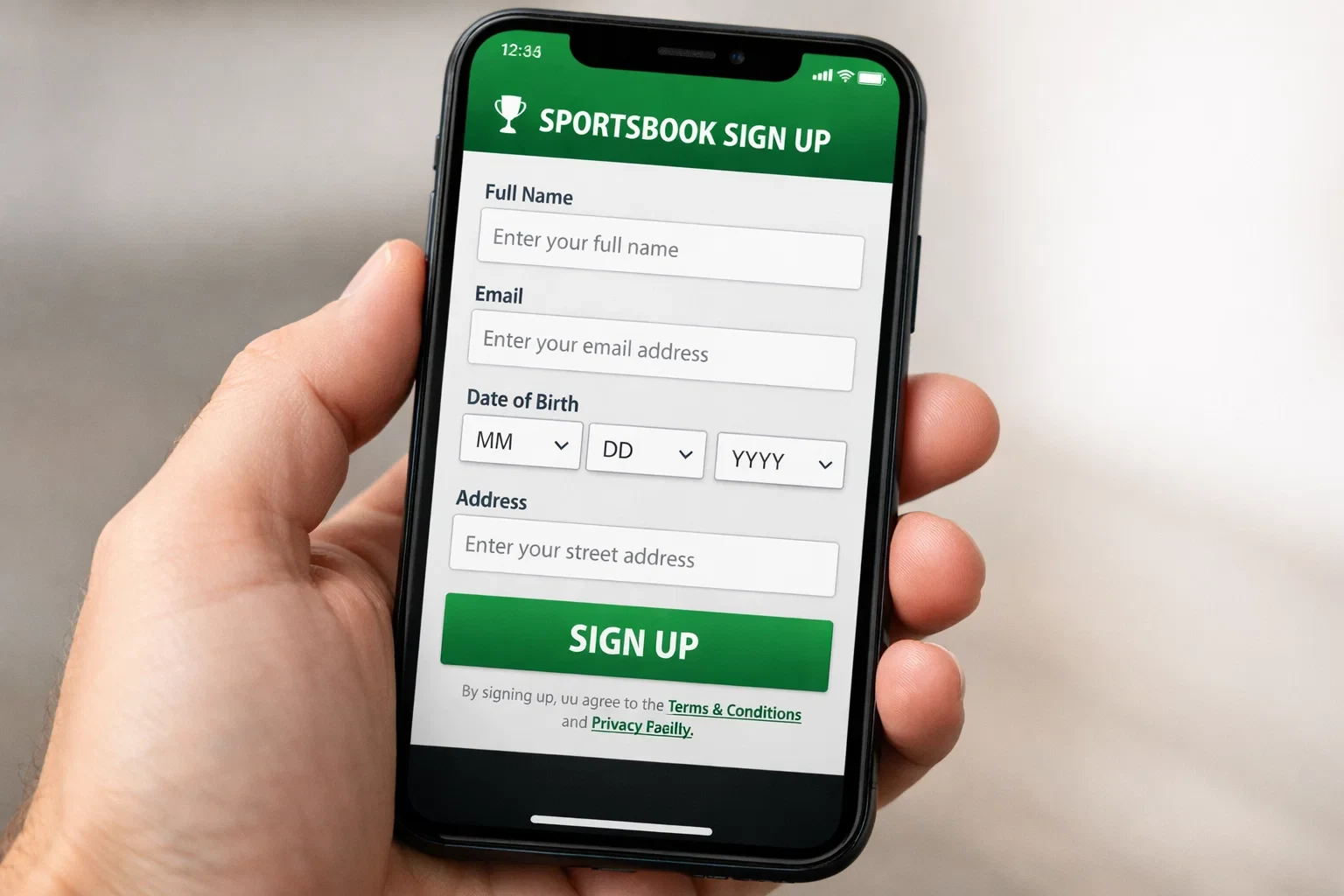
Registration typically takes five to ten minutes and requires information you should have readily available. The sportsbook needs to verify your identity for legal and security reasons, so have the following ready: your full legal name exactly as it appears on your ID, your date of birth, your Social Security number (usually just the last four digits), your current address, a valid email address, and a phone number.
The email and phone number serve practical purposes—password resets, promotional notifications, and two-factor authentication. Use real contact information you actually check. A dedicated email address for gambling accounts isn't a bad idea if you want to keep promotional messages separate from your main inbox.
When creating your username and password, apply the same security practices you'd use for online banking. Strong password, unique to this account, stored somewhere secure. Enable two-factor authentication if offered—it adds one extra step to logging in but significantly reduces the risk of someone accessing your account without permission.
Most sportsbooks will verify your identity automatically by cross-referencing the information you provide against public databases. This usually takes seconds. If automatic verification fails for some reason, you'll be asked to upload photos of a government-issued ID (driver's license or passport) and possibly a utility bill or bank statement as proof of address. This is normal, not a red flag, and happens to a meaningful percentage of new users. The manual review process typically completes within 24 to 48 hours.
Step Four: Fund Your Account
With your account created and verified, you need money to bet with. Navigate to the cashier or banking section of the app—usually accessible through a button labeled "Deposit" or a wallet icon. You'll see a list of available deposit methods that typically includes debit cards, credit cards (though many banks block gambling transactions), PayPal, Venmo, online banking transfers, and sometimes prepaid cards or cash at retail locations.
Debit cards and PayPal are the most commonly used options because they're fast and reliable. Enter the amount you want to deposit, keeping in mind that most books have minimum deposits of $10 to $20. Before you type in a number, stop and think about your budget. This should be money you can afford to lose entirely without affecting your life—entertainment money, not rent money. Starting with $50 to $100 is perfectly reasonable for your first experience.
Many sportsbooks offer welcome bonuses for new customers—things like "Bet $5, Get $200 in Bonus Bets" or "First Bet Insurance up to $1,000." These promotions can provide value, but read the terms carefully. Bonus bets typically aren't withdrawable as cash; you must use them to place bets, and only the winnings (if any) become real money. The terms will also specify minimum odds requirements and time limits for using the bonus. Don't deposit more than you intended just to maximize a bonus you don't fully understand.
Step Five: Navigate the Betting Interface
Now comes the part that probably intimidated you in the first place: actually finding something to bet on. Sportsbook apps are designed to be used by both beginners and experienced bettors, which means they contain a lot of options that might seem overwhelming at first. Start simple.
On the home screen, you'll likely see featured games and popular bets. You can also navigate by sport using tabs or a menu—look for NFL, NBA, WNBA, MLB, NHL, soccer, tennis, or whatever interests you. Tap on a sport to see available games and events. Then tap on a specific game to see all the betting markets for that matchup.
For your first bet, stick to the basics. Every game will display three primary bet types: the spread (point spread), the moneyline (who wins outright), and the total (over/under on combined points). The numbers next to each option are the odds. A team listed at -150 on the moneyline is the favorite; +130 is the underdog. Don't worry about understanding every number on the screen—focus on one bet type.
The moneyline is the simplest starting point. You're just picking which team wins. If you think the Los Angeles Sparks will beat the Seattle Storm, tap the moneyline odds next to the Sparks. This adds the bet to your bet slip, which is usually visible at the bottom of the screen.
Step Six: Place and Confirm Your Bet
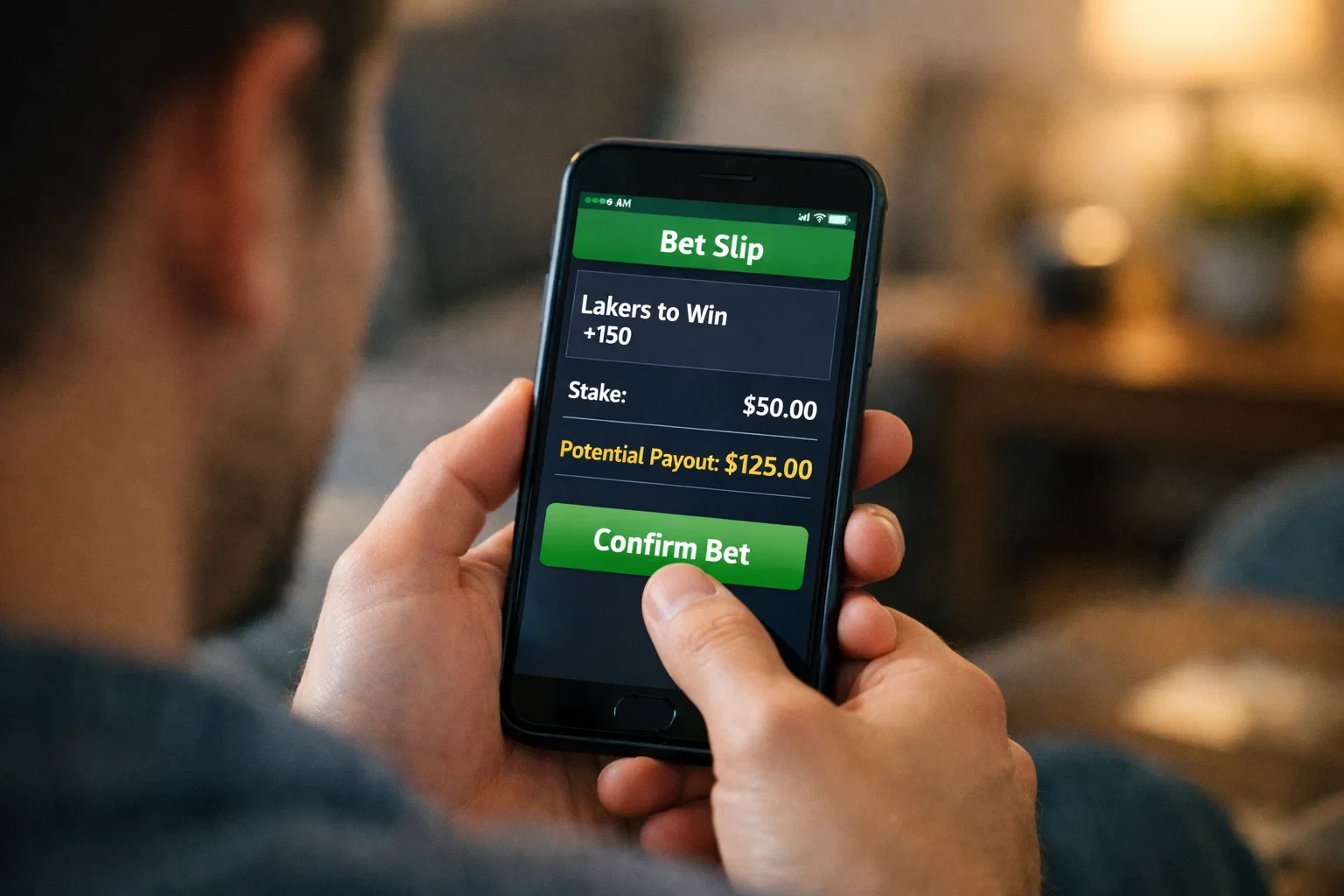
With a selection in your bet slip, you need to enter your stake—how much you're betting. The app will show you the potential payout based on the odds. If you bet $20 on a team at +120 odds, the potential payout displayed might be $44—that's your $20 stake plus $24 in profit. If the odds are -150, betting $30 would show a potential payout of $50—your $30 stake plus $20 in profit.
Start small. There's no prize for betting big on your first wager, and you'll learn more from the process by not being overly invested in any single outcome. A $10 or $20 bet is plenty to make the game interesting without creating unnecessary stress.
Before you confirm, double-check everything. Verify you've selected the right team, the right bet type, and the right amount. Once you tap "Place Bet" or "Confirm," your wager is locked in and can't be changed. The money leaves your account balance immediately. You'll receive confirmation—usually a notification and an entry in your bet history—that the wager has been accepted.
That's it. You've placed a bet. Now you wait for the game to happen, and the app will automatically settle your bet when it concludes. Winnings appear in your balance typically within minutes of the game ending. Losses simply disappear—you won't get a notification reminding you that you lost, which is a small mercy.
After the Bet: What Happens Next
Whether you won or lost your first bet, take a moment to explore the app further. Check your bet history to see how the system recorded your wager. Look at other bet types you didn't try—props, parlays, futures. Read through the help section if you have questions about specific features.
If you want to withdraw money at any point, navigate back to the cashier section and look for "Withdraw." Withdrawal processing times vary by method: PayPal and e-wallets are typically fastest (within 24 hours), while bank transfers can take three to five business days. Some sportsbooks process withdrawals faster than others, and this is something you might consider when choosing where to bet long-term.
Most importantly, reflect on how the experience felt. Was it fun? Did you feel in control? Was the amount you risked appropriate for entertainment spending? These questions matter more than whether you won or lost. Sports betting should be enjoyable, not stressful. If it felt like too much at any point, that's useful information about how to approach future bets—maybe smaller stakes, maybe fewer bets, maybe a break.
Review the helpful parlay betting basics.
Common First-Timer Mistakes and How to Avoid Them
New bettors consistently make a few predictable errors that are easy to avoid with awareness. Betting on your favorite team regardless of the odds is the most common—your emotional investment doesn't translate to analytical edge, and it often clouds judgment. If you want to bet on teams you root for, at least acknowledge that you're doing it for fun rather than profit and size your bets accordingly.
Chasing losses—immediately placing another bet to try recovering money you just lost—is a trap that catches even experienced gamblers. After any losing bet, take a breath. Do something else. The games will still be there tomorrow. The urge to "win it back" is psychological, not logical, and acting on it rarely ends well.
Ignoring bankroll management turns betting from entertainment into financial stress. Decide before you start what percentage of your total betting funds you're willing to risk on any single bet—1% to 5% is standard advice. If you deposited $100, individual bets should be $1 to $5 until you're comfortable and confident. This sounds conservative because it is, and that's the point.
Finally, don't expect to win consistently, especially at first. The sportsbooks employ very smart people to set lines, and they're good at it. Even successful long-term bettors only win about 52% to 55% of their spread bets. Your first priority is learning—understanding how everything works, figuring out what you enjoy betting on, developing a feel for the rhythms of the market. The wins will come eventually if you put in the work, but they're a byproduct of skill development, not the starting point.
You've now joined the millions of Americans who legally bet on sports. Welcome to the club. Do your research, manage your money wisely, and remember that the whole point is to have fun. If it stops being fun, it's okay to step back. The sportsbooks will still be there whenever you're ready to return.
Reduce risky accumulator bets on women bet.
