 WomenBet
Setting Betting Limits
 Available in US

Sports betting should be entertainment—an engaging way to enjoy the sports you follow with the possibility of winning some money. When it stops being fun and starts creating stress, financial pressure, or anxiety, something has gone wrong. The good news is that modern sportsbooks provide tools specifically designed to help bettors maintain control. Using these tools proactively, before problems develop, is one of the smartest moves any bettor can make.
This guide explains the responsible gambling features available at most legal sportsbooks, how to use them effectively, and how to create personal rules that protect both your finances and your enjoyment of betting.
Why Limits Matter
Even bettors with excellent discipline benefit from external limits. When you're in the middle of a losing streak, frustrated and eager to recover, your judgment is compromised. Having preset limits that physically prevent problematic decisions protects you from your worst impulses.
Think of betting limits like guardrails on a mountain road. Most of the time, you're driving perfectly fine and the guardrails are irrelevant. But on the one day you hit a slick patch or get distracted, those guardrails prevent a catastrophe. You don't need limits because you're irresponsible—you need limits because you're human, and humans make mistakes under emotional pressure.
Research consistently shows that female bettors generally demonstrate better discipline than their male counterparts, with more controlled bankroll management and less tendency to chase losses. But "better than average" doesn't mean "perfect." The women who maintain those positive outcomes over the long term often use available tools to reinforce their natural discipline rather than relying solely on willpower.
Types of Limits Available
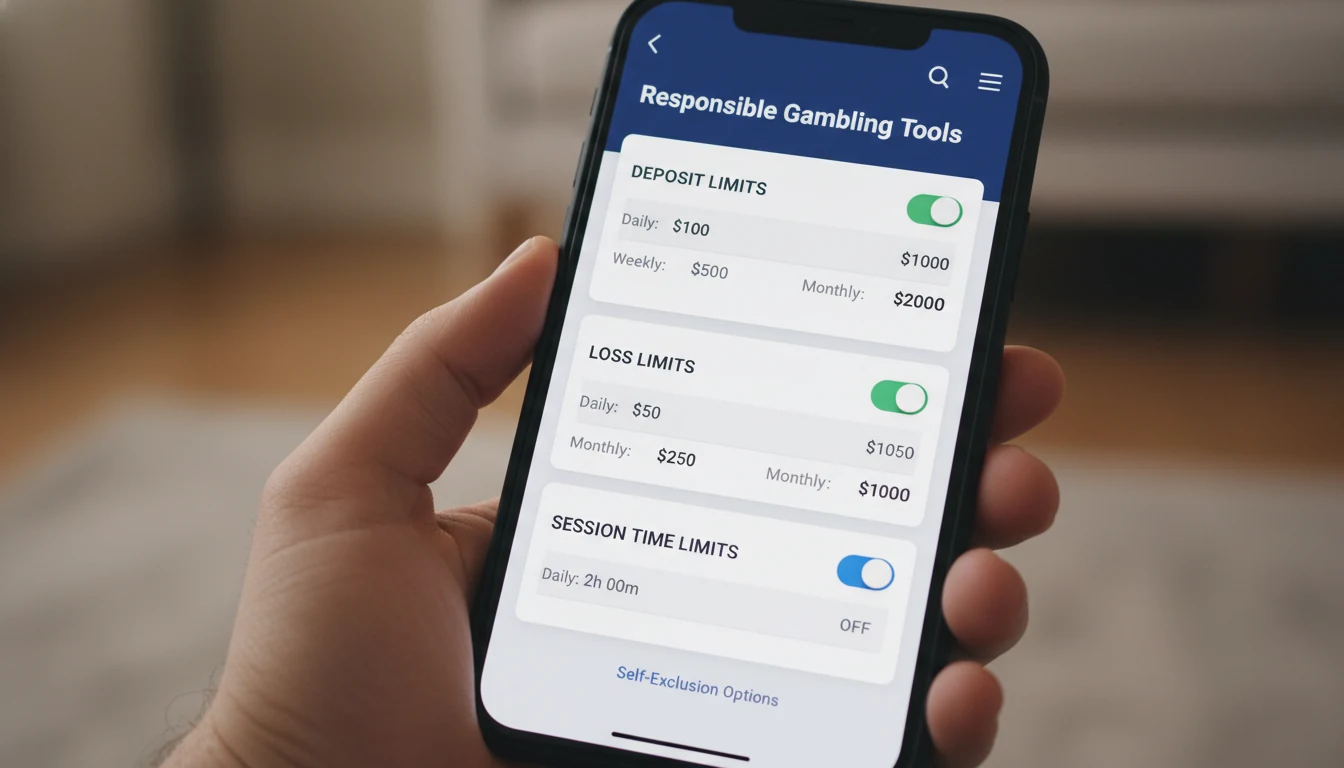
Legal sportsbooks in regulated markets offer various tools to help bettors maintain control. While specific features vary by operator, most major sportsbooks provide several types of limits.
Deposit limits cap how much money you can add to your account within a specified timeframe—daily, weekly, or monthly. Once you reach your limit, the sportsbook physically prevents additional deposits until the period resets. This is perhaps the most fundamental tool, as it directly controls how much money you can put at risk.
Wager limits restrict the amount you can bet on individual wagers or within a time period. If you set a $50 per-bet maximum, the system won't let you place a $100 wager even if you have the funds available. This prevents the enlarged bet sizes that often accompany emotional betting.
Loss limits cap how much you can lose within a specified period. When you hit your loss limit, betting is suspended until the period resets. This directly addresses the chasing behavior that destroys bankrolls—you literally cannot continue betting after reaching your predetermined loss threshold.
Session time limits restrict how long you can bet in a single session. After your allotted time expires, you're logged out and cannot continue. This helps prevent the marathon betting sessions where fatigue and frustration compound poor decision-making.
Reality checks are periodic notifications that remind you how long you've been betting and how much you've wagered or lost. Unlike hard limits, these don't force you to stop, but they interrupt the flow state that can lead to mindless continued betting.
Cooling-off periods allow you to take a temporary break from betting—typically anywhere from 24 hours to several months. During this period, you cannot access your account or place bets. This is useful when you recognize you need a break but don't want permanent exclusion.
Self-exclusion is the most serious option, barring you from the sportsbook for extended periods (often one to five years, or permanently). Self-exclusion is difficult or impossible to reverse before the specified period ends and should be reserved for situations where you've recognized a genuine problem with gambling.
Setting Effective Limits
Having tools available means nothing if you don't use them thoughtfully. Here's how to set limits that actually protect you.
Start with deposit limits. Before placing your first bet at any sportsbook, set a monthly deposit limit that represents the maximum you're comfortable potentially losing. This should be genuinely discretionary money—not rent, not savings goals, not money you'll need for other purposes. Think of it as your entertainment budget for betting, comparable to what you might spend on other leisure activities.
Set limits when you're thinking clearly. Don't wait until you're in the middle of a losing streak to set loss limits. That's when your judgment is worst and when you're most likely to set limits too high or skip them entirely. Set your limits during a calm moment, before you start betting for the day or week.
Make limits proportional to your bankroll. If your total betting bankroll is $500, a $500 daily loss limit provides no protection. Meaningful limits for that bankroll might be $50 daily loss limit and $150 weekly loss limit. These thresholds force you to stop before catastrophic damage occurs.
Use multiple layers of protection. Deposit limits, loss limits, and session time limits work together. Maybe you can deposit $200 per month, lose no more than $50 per day, and must take a break after two hours of betting. Each layer catches different types of problematic behavior.
Accept that increasing limits should be difficult. Most sportsbooks make it easy to lower limits (taking effect immediately) but harder to raise them (requiring waiting periods, often 24-72 hours or longer). This asymmetry is intentional and helpful. When you're frustrated by your limits, that waiting period gives you time to reconsider whether you really want to raise them.
Creating Personal Rules Beyond Sportsbook Tools
Sportsbook tools are valuable but incomplete. Creating your own additional rules provides layers of protection that no app can enforce.
Never bet money you can't afford to lose. This is the foundational rule. If losing your betting bankroll would cause financial hardship, relationship stress, or inability to meet obligations, your bankroll is too large. Reduce it until losing everything feels like "that's unfortunate" rather than "this is a crisis."
Don't bet under the influence. Alcohol impairs judgment, lowers inhibitions, and encourages risk-taking—all of which hurt betting outcomes. If you're drinking while watching sports, either leave your betting for another time or remove betting apps from your phone during social situations.
Take breaks after significant losses. Even if you haven't hit your limits, losing three or four bets in a row should trigger a pause. Step away from betting, do something else, and return only when you're calm and thinking clearly.
Never bet to recover losses. If you lose $100 and immediately think "I need to win that back," that's a warning sign. The next bet should be evaluated entirely on its own merits, not on its ability to recover previous losses. Losses are already gone; your next bet can't undo them.
Schedule betting-free days. Having days when you simply don't bet—regardless of what games are on—maintains perspective and ensures betting doesn't become compulsive. Maybe you don't bet on weekdays, or you take every other weekend off.
Keep betting separate from other finances. Maintain a dedicated betting bankroll distinct from your checking account, savings, and regular spending money. This separation makes it easier to track results and prevents betting from creeping into money meant for other purposes.
Recognizing When Limits Need Adjustment
Your limits should evolve with your situation. Regular check-ins help ensure they remain appropriate.
Review your limits monthly. Are you consistently hitting your limits and feeling frustrated? That might mean your limits are right and you need to accept them, or it might mean you're betting too frequently. Are you never approaching your limits? They might be too high to provide real protection, or you might be betting very conservatively—either way, worth examining.
Adjust limits down during stressful periods. Life stress—work problems, relationship difficulties, financial pressure—affects your judgment and impulse control. During difficult periods, tighten your limits even if you haven't had betting problems. Loosen them again when life stabilizes.
Be honest about whether betting is still fun. If you're betting out of compulsion rather than enjoyment, if you're thinking about betting when you should be focused on other things, if you're lying to family or friends about how much you bet—these are signs that your current limits aren't working. Either tighten them significantly or take an extended break.
Using Cooling-Off Periods and Self-Exclusion

If you recognize that betting has become problematic, more serious tools are available.
Cooling-off periods provide a temporary break. Most sportsbooks offer options ranging from 24 hours to several months. During this period, you cannot access your account or place bets. Use cooling-off periods when you need to reset but don't feel you have a chronic problem—for example, after an unusually bad weekend or during a stressful life period.
Self-exclusion is more permanent. When you self-exclude, you're barred from the sportsbook for an extended period (typically one year minimum, sometimes permanently). Many states offer statewide self-exclusion programs that ban you from all gambling operators in that state simultaneously.
Self-exclusion is difficult to reverse. This is intentional—it protects you from moments of weakness when you might want to return before you're ready. If you're considering self-exclusion, you've likely already recognized that betting has become a problem. Take the step; your future self will thank you.
Resources for Help
If you recognize signs of problem gambling—betting more than you can afford, lying about betting, gambling interfering with work or relationships, being unable to stop despite wanting to—resources are available.
The National Council on Problem Gambling operates a 24/7 helpline at 1-800-GAMBLER, available in all U.S. states. They provide confidential support, resources, and referrals to local treatment options.
The NCPG also offers online chat at NCPGambling.org/Chat for those who prefer text-based communication.
Gamblers Anonymous provides peer support through local meetings and online resources. Their twelve-step program has helped many people recover from gambling addiction.
Individual therapy with counselors specializing in gambling addiction can provide personalized treatment. Many treatment options are covered by insurance, and some are available via telehealth.
The Bigger Picture
Setting limits isn't a sign of weakness—it's an act of self-knowledge and self-protection. The bettors who maintain long-term control over their gambling are those who understand their own vulnerabilities and structure their betting to account for them.
Women bettors often demonstrate natural advantages in discipline and risk management. Using sportsbook tools and personal rules reinforces these strengths rather than replacing them. Think of limits as insurance: you hope you never need them, but you're grateful they exist on the day you do.
Betting should add enjoyment to your life, not subtract from it. Setting appropriate limits ensures it stays that way.
